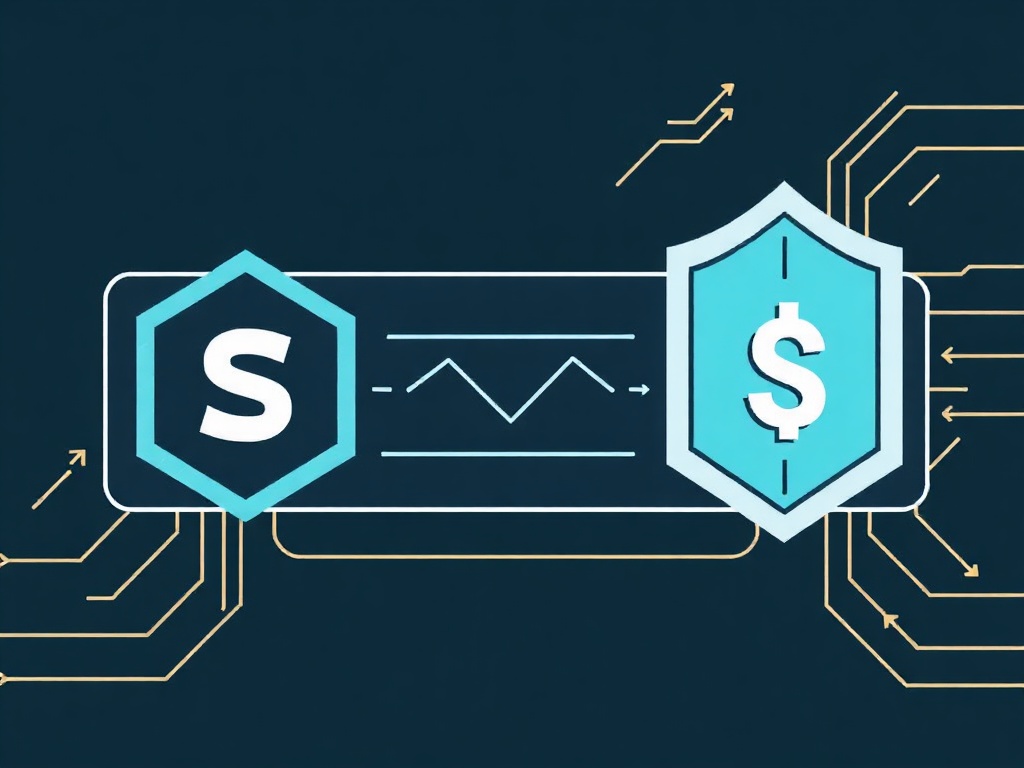
In the rapidly evolving landscape of digital finance, Anti-Money Laundering (AML) compliance remains a critical challenge for financial institutions, cryptocurrency exchanges, and blockchain networks. Traditional AML checks often rely on transparent transaction data, which can conflict with user privacy expectations. This is where zk-SNARKs (Zero-Knowledge Succinct Non-Interactive Arguments of Knowledge) come into play, offering a groundbreaking solution through AML check zk-SNARK transaction shielding. This technology enables transactions to be verified for compliance without exposing sensitive financial details, striking a balance between regulatory oversight and user confidentiality.
In this comprehensive guide, we explore the mechanics, benefits, challenges, and real-world applications of AML check zk-SNARK transaction shielding. We’ll examine how this innovative approach is reshaping the future of financial privacy and regulatory compliance in decentralized ecosystems.
What Is AML Check zk-SNARK Transaction Shielding?
Defining zk-SNARKs in the Context of AML Compliance
zk-SNARKs are cryptographic proofs that allow one party (the prover) to convince another party (the verifier) that a statement is true without revealing any additional information beyond the validity of the statement itself. In the context of AML check zk-SNARK transaction shielding, this means:
- A user can prove that their transaction complies with AML regulations (e.g., no illicit funds, proper source of wealth)
- The transaction details (amount, sender, receiver) remain encrypted and hidden from public view
- A regulator or compliance node can verify the proof without accessing sensitive data
This is particularly valuable in privacy-focused blockchains like Zcash, where transactions are shielded by default using zk-SNARKs. However, the integration of AML checks into this framework introduces a new paradigm: regulatory compliance without sacrificing privacy.
The Role of AML Checks in Cryptocurrency Transactions
AML checks are mandatory for financial institutions to prevent money laundering, terrorist financing, and other financial crimes. In traditional banking, these checks involve:
- Customer Due Diligence (CDD)
- Transaction Monitoring
- Suspicious Activity Reporting (SAR)
- Know Your Customer (KYC) procedures
In cryptocurrency, AML compliance is more complex due to the pseudonymous nature of blockchain transactions. While public blockchains like Bitcoin offer transparency, they lack privacy, making it difficult to protect user identities. Private or privacy-enhanced blockchains (e.g., Monero, Zcash) offer anonymity but raise concerns about illicit activity going undetected.
AML check zk-SNARK transaction shielding bridges this gap by enabling:
- Privacy-preserving transactions
- Regulatory visibility into compliance
- Automated verification of AML rules
How zk-SNARKs Enable Transaction Shielding
The core mechanism of zk-SNARKs involves three key components:
- Trusted Setup: A one-time cryptographic ceremony generates public parameters used to create and verify proofs.
- Proof Generation: The sender generates a zk-SNARK proof that the transaction complies with AML rules (e.g., funds are not from a blacklisted address).
- Verification: A compliance node or smart contract verifies the proof without learning the transaction details.
For example, in a zk-SNARK-based AML check, a user might prove:
- “The funds in this transaction were not received from a known illicit source.”
- “The sender’s wallet has undergone KYC verification.”
- “The transaction amount is within regulatory limits.”
This allows the transaction to proceed while ensuring compliance, all without exposing sensitive financial data.
Why AML Check zk-SNARK Transaction Shielding Matters
Balancing Privacy and Regulatory Compliance
One of the biggest challenges in cryptocurrency is the tension between privacy and compliance. Users demand financial privacy, while regulators demand transparency to prevent crime. Traditional solutions often force a trade-off:
- Transparent blockchains (e.g., Bitcoin): Full visibility for regulators, but no privacy for users.
- Anonymous blockchains (e.g., Monero): Complete privacy for users, but no visibility for regulators.
AML check zk-SNARK transaction shielding resolves this by offering selective transparency—users retain privacy, while regulators can verify compliance when necessary. This is particularly important for:
- Institutional investors using privacy coins
- Cross-border transactions subject to AML laws
- Decentralized finance (DeFi) platforms integrating compliance
Enhancing Security Against Illicit Activities
Cryptocurrencies have been associated with illicit activities due to their pseudonymous nature. While blockchain forensics tools (e.g., Chainalysis, Elliptic) help track suspicious transactions, they rely on transparent ledgers. In privacy coins, illicit transactions can go undetected.
By integrating AML check zk-SNARK transaction shielding, privacy-preserving blockchains can:
- Allow regulators to audit transactions without compromising user privacy
- Enable automated screening of transactions against sanctions lists and blacklists
- Reduce the risk of regulatory crackdowns by demonstrating proactive compliance
This proactive approach not only protects users from unintentional exposure to illicit funds but also strengthens the legitimacy of privacy-focused cryptocurrencies in the eyes of regulators.
Facilitating Institutional Adoption of Privacy Coins
Institutional investors, such as hedge funds and asset managers, are increasingly interested in privacy coins for portfolio diversification and risk management. However, their adoption is hindered by compliance concerns. Traditional AML frameworks are not designed for privacy-enhancing technologies (PETs).
AML check zk-SNARK transaction shielding provides a solution by enabling:
- Automated compliance checks within private transactions
- Integration with existing AML/KYC systems
- Audit trails that satisfy regulatory requirements without exposing sensitive data
This paves the way for institutional-grade privacy solutions that meet both user privacy expectations and regulatory standards.
How AML Check zk-SNARK Transaction Shielding Works: A Technical Deep Dive
The Cryptographic Foundation: zk-SNARKs Explained
To understand AML check zk-SNARK transaction shielding, it’s essential to grasp the underlying cryptography. zk-SNARKs are a type of zero-knowledge proof with three key properties:
- Completeness: If the statement is true, an honest prover can convince the verifier.
- Soundness: If the statement is false, a dishonest prover cannot convince the verifier.
- Zero-Knowledge: The verifier learns nothing about the statement beyond its validity.
In a blockchain context, zk-SNARKs are used to create shielded transactions where:
- The sender and receiver addresses are hidden.
- The transaction amount is encrypted.
- A proof is generated to validate the transaction without revealing details.
Integrating AML Rules into zk-SNARK Proofs
The challenge lies in embedding AML compliance into these proofs. This requires defining compliance predicates—mathematical conditions that must be satisfied for a transaction to be considered compliant. Examples include:
- Source of Funds Verification: The transaction sender proves that funds were not received from a blacklisted address.
- Transaction Limits: The sender proves that the amount is within regulatory thresholds (e.g., below $10,000 for simplified due diligence).
- KYC Attestation: The sender proves that their identity has been verified by a trusted third party (e.g., a KYC provider).
These predicates are encoded into the zk-SNARK circuit—a computational framework that generates the proof. For instance, a circuit might include:
- Input variables: sender’s public key, transaction amount, recipient’s public key (if not shielded)
- Private inputs: proof of non-blacklisted source, proof of KYC completion
- Output: a zk-SNARK proof that the transaction complies with AML rules
Once generated, this proof is attached to the transaction and submitted to the blockchain. A compliance node or smart contract verifies the proof, ensuring the transaction meets AML standards without accessing sensitive data.
Real-World Implementation: Case Studies
Several projects are pioneering AML check zk-SNARK transaction shielding in practice:
1. Zcash’s Selective Disclosure (Sapling Upgrade)
Zcash, one of the first privacy coins to use zk-SNARKs, introduced selective disclosure in its Sapling upgrade. This allows users to:
- Generate a zk-SNARK proof of transaction validity.
- Optionally reveal transaction details to auditors or regulators using a viewing key.
- Comply with subpoenas or regulatory requests without compromising all users’ privacy.
While Zcash does not natively integrate AML checks, its architecture provides a foundation for future compliance layers.
2. Tornado Cash (Before Sanctions)
Tornado Cash, a privacy-focused Ethereum mixer, used zk-SNARKs to shield transaction origins. While it did not explicitly include AML checks, its design inspired compliance-integrated solutions. Post-sanctions, the project’s evolution highlights the need for regulatory alignment in privacy tools.
3. Ironclad (Compliance-First Privacy Protocol)
Ironclad is a newer protocol designed specifically for AML check zk-SNARK transaction shielding. It integrates:
- Automated screening against sanctions lists
- KYC attestations embedded in zk-SNARK proofs
- Regulator-accessible audit trails
Ironclad’s approach demonstrates how privacy and compliance can coexist in a single framework.
Challenges in Implementation
Despite its promise, integrating AML checks with zk-SNARKs presents technical and operational challenges:
- Trusted Setup Risks: The initial cryptographic parameters must be generated securely to prevent backdoors. Solutions like Powers of Tau ceremonies mitigate this risk.
- Computational Overhead: Generating zk-SNARK proofs is resource-intensive, requiring optimized circuits and hardware acceleration.
- Regulatory Uncertainty: AML laws vary by jurisdiction, making it difficult to define universal compliance predicates.
- User Experience: Managing zk-SNARK proofs and compliance attestations adds complexity for end users.
Addressing these challenges requires collaboration between cryptographers, regulators, and blockchain developers.
Regulatory and Legal Considerations for AML Check zk-SNARK Transaction Shielding
The Global AML Regulatory Landscape
Anti-money laundering regulations are enforced by various bodies worldwide, including:
- Financial Action Task Force (FATF): Sets international AML standards, including the Travel Rule for virtual assets.
- Bank Secrecy Act (BSA) (U.S.): Requires financial institutions to report suspicious transactions.
- EU’s 5th and 6th AML Directives: Mandate KYC and transaction monitoring for crypto service providers.
- Financial Conduct Authority (FCA) (UK): Oversees AML compliance for crypto businesses.
These regulations were not designed with privacy-enhancing technologies in mind. However, AML check zk-SNARK transaction shielding offers a pathway to compliance by enabling:
- Automated verification of regulatory requirements
- Audit trails that satisfy reporting obligations
- Integration with existing AML software (e.g., Chainalysis Reactor)
How Regulators View Privacy Coins and zk-SNARKs
Regulators have mixed views on privacy coins and zk-SNARKs:
- Pro-Privacy Advocates: Argue that privacy is a fundamental right and that zk-SNARKs can enhance compliance by reducing false positives in transaction monitoring.
- Regulatory Skeptics: View privacy coins as tools for illicit finance and have called for outright bans or strict controls.
For example:
- The U.S. Treasury has sanctioned privacy-focused mixers like Tornado Cash, citing their use in laundering stolen funds.
- The European Central Bank has expressed concerns about the anonymity of privacy coins but acknowledges their potential for compliant use.
- Japan and South Korea have banned privacy coins on exchanges, while Switzerland and Singapore allow them under strict conditions.
AML check zk-SNARK transaction shielding can help address these concerns by demonstrating that privacy does not equate to lawlessness. By embedding compliance into the transaction layer, projects can show regulators that they are taking proactive steps to prevent illicit use.
Legal Precedents and Compliance Frameworks
Several legal developments are shaping the future of AML check zk-SNARK transaction shielding:
1. FATF’s Guidance on Virtual Assets and VASPs
The FATF’s Travel Rule requires Virtual Asset Service Providers (VASPs) to share sender and receiver information for transactions above $1,000. While this is challenging for privacy coins, zk-SNARKs can enable:
- Selective disclosure of transaction details to authorized parties
- Automated generation of compliance reports
- Integration with VASP networks for cross-border compliance
2. The EU’s MiCA Regulation
The Markets in Crypto-Assets (MiCA) regulation, set to take full effect in 2024, will impose strict AML requirements on crypto issuers and service providers. Under MiCA, privacy coins may be permitted only if they incorporate compliance mechanisms like AML check zk-SNARK transaction shielding.
3. U.S. FinCEN’s Proposed Rules on Unhosted Wallets
The U.S. Financial Crimes Enforcement Network (FinCEN) has proposed rules requiring crypto businesses to verify the identity of users transacting with unhosted (self-custody) wallets. zk-SNARK-based solutions can help users prove compliance without revealing their wallet addresses or transaction history.
Best Practices for Projects Implementing AML Check zk-SNARK Transaction Shielding
For projects seeking to implement AML check zk-SNARK transaction shielding, the following best practices can ensure regulatory alignment and user trust:
- Engage with Regulators Early: Collaborate with financial authorities to define compliance predicates and reporting mechanisms.
- Use Audited Cryptographic Libraries: Leverage well-audited zk-SNARK implementations (e.g., libsnark, Bellman) to minimize vulnerabilities.
- Implement Granular Access Controls: Allow users to control who can view transaction details (e.g., regulators, auditors, counterparties).
- Provide Transparent Documentation: Publish whitepapers and compliance reports to demonstrate adherence to AML standards.
- Integrate with Existing AML Tools: Ensure compatibility with blockchain forensics platforms (e.g., Chainalysis, TRM Labs) for seamless monitoring.
Future Trends and the Evolution of AML Check zk-SNARK Transaction Shielding

AML Check zk-SNARK Transaction Shielding: Balancing Privacy and Compliance in Digital Assets
As a Senior Crypto Market Analyst with over a decade of experience in digital asset markets, I’ve observed that privacy-enhancing technologies like zk-SNARKs are reshaping the balance between confidentiality and regulatory compliance. The integration of AML (Anti-Money Laundering) checks within zk-SNARK transaction shielding represents a critical evolution in blockchain privacy solutions. While zk-SNARKs enable users to conceal transaction details—such as sender, receiver, and amount—from the public ledger, they must not become a loophole for illicit finance. The challenge lies in designing systems that preserve user privacy while ensuring that transaction legitimacy can still be verified by authorized entities. Projects like Zcash have pioneered this space, but the real breakthrough will come when AML check zk-SNARK transaction shielding becomes a standard feature, not an optional add-on.
From a practical standpoint, the implementation of AML checks within zk-SNARK frameworks requires a delicate architectural approach. Traditional AML screening relies on on-chain transparency to trace funds and identify suspicious patterns. However, with fully shielded transactions, this visibility is lost unless selective disclosure mechanisms are embedded into the protocol. The most promising solutions involve zero-knowledge proofs that allow auditors to verify compliance without exposing sensitive transaction data. For institutional adoption to accelerate, regulators must recognize these privacy-preserving compliance tools as equivalent to traditional AML measures. In my view, the next wave of innovation in this space will come from projects that can demonstrate robust, auditable AML check zk-SNARK transaction shielding without compromising the core benefits of privacy. The market is watching closely—those who get this balance right will set the standard for the future of compliant digital asset transactions.