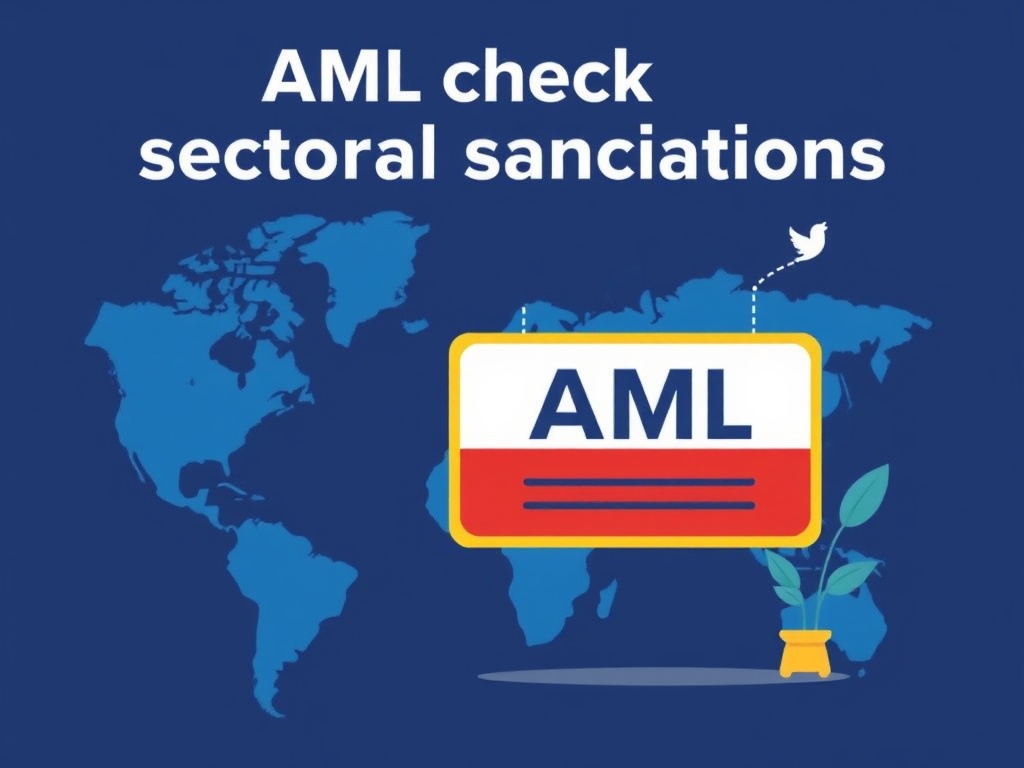
In the evolving landscape of financial crime prevention, AML check sectoral sanctions have emerged as a critical component of regulatory compliance. These sanctions, designed to restrict transactions with specific entities or individuals linked to illicit activities, require financial institutions to implement robust screening mechanisms. This guide explores the intricacies of sectoral sanctions within the Anti-Money Laundering (AML) framework, offering actionable insights for compliance teams, risk managers, and legal professionals.
The enforcement of AML check sectoral sanctions is not merely a legal obligation but a strategic imperative to mitigate financial crime risks. Institutions failing to comply with these measures face severe penalties, reputational damage, and operational disruptions. By understanding the nuances of sectoral sanctions, organizations can enhance their compliance programs and safeguard their operations against illicit financial flows.
The Role of Sectoral Sanctions in AML Compliance
Sectoral sanctions represent a targeted approach to combating financial crime by imposing restrictions on specific industries, geographic regions, or economic sectors. Unlike comprehensive sanctions that blanket entire countries, sectoral sanctions focus on particular activities or entities, such as:
- Restrictions on financial transactions with designated financial institutions
- Prohibitions on trade in specific commodities (e.g., oil, arms, or technology)
- Bans on investments in certain industries (e.g., defense or energy sectors)
- Limits on the provision of financial services to sanctioned entities
These sanctions are typically imposed by regulatory bodies such as the Office of Foreign Assets Control (OFAC) in the United States, the European Union (EU), or the United Nations (UN). Their primary objective is to disrupt illicit financial networks while minimizing collateral economic impact.
Key Differences Between Sectoral and Comprehensive Sanctions
Understanding the distinction between sectoral and comprehensive sanctions is essential for designing an effective AML check sectoral sanctions strategy. Below is a comparison of the two approaches:
| Aspect | Sectoral Sanctions | Comprehensive Sanctions |
|---|---|---|
| Scope | Targeted restrictions on specific sectors or activities | Broad restrictions on an entire country or regime |
| Economic Impact | Limited collateral damage to the broader economy | Significant economic disruption, often affecting civilians |
| Implementation | Focused on high-risk industries or entities | Applies to all transactions within a sanctioned jurisdiction |
| Compliance Complexity | Requires granular screening of transactions and counterparties | Simpler to implement but broader in scope |
For financial institutions, sectoral sanctions present a unique challenge. Unlike comprehensive sanctions, which can be addressed through automated screening against country lists, sectoral sanctions demand a more nuanced approach. Institutions must identify and screen for specific activities, industries, or entities that fall under these restrictions.
Regulatory Frameworks Governing AML Check Sectoral Sanctions
The enforcement of AML check sectoral sanctions is governed by a complex web of international and domestic regulations. Compliance professionals must navigate these frameworks to ensure their institutions remain in good standing with regulatory authorities.
International Regulatory Bodies and Their Role
Several key organizations play a pivotal role in shaping and enforcing sectoral sanctions:
- Financial Action Task Force (FATF): While not a sanctions authority, FATF sets global standards for AML and Counter-Terrorist Financing (CTF). Its recommendations influence how jurisdictions design and implement sectoral sanctions.
- Office of Foreign Assets Control (OFAC): A division of the U.S. Department of the Treasury, OFAC administers and enforces economic sanctions programs, including sectoral sanctions targeting specific industries or activities.
- European Union (EU): The EU imposes sectoral sanctions through its Common Foreign and Security Policy (CFSP), targeting activities such as arms trade, energy sector investments, and financial transactions with designated entities.
- United Nations Security Council (UNSC): The UNSC imposes sanctions under Chapter VII of the UN Charter, often targeting specific sectors like diamond trade or arms embargoes.
Domestic Implementation of Sectoral Sanctions
In addition to international frameworks, domestic regulators play a crucial role in enforcing AML check sectoral sanctions. For example:
- U.S. Regulations: OFAC’s Sectoral Sanctions Identifications (SSI) List identifies individuals and entities operating in sectors such as finance, energy, and defense. Institutions must screen against this list to ensure compliance.
- EU Regulations: The EU’s sectoral sanctions are implemented through regulations such as Regulation (EU) No 833/2014, which imposes restrictions on trade with Russia in sectors like energy, defense, and dual-use goods.
- UK Sanctions: Post-Brexit, the UK has established its own sanctions regime, including sectoral sanctions targeting activities such as the provision of financial services to Russian banks.
Compliance professionals must stay abreast of these regulatory updates to ensure their AML check sectoral sanctions programs remain effective and up-to-date.
Implementing an Effective AML Check Sectoral Sanctions Program
Designing and implementing a robust AML check sectoral sanctions program requires a multi-faceted approach. Institutions must integrate screening mechanisms, risk assessment tools, and ongoing monitoring to identify and mitigate risks associated with sectoral sanctions.
Step 1: Conducting a Risk Assessment
The foundation of any effective sanctions compliance program is a comprehensive risk assessment. This process involves identifying the specific sectoral sanctions risks relevant to the institution’s operations, including:
- Geographic Exposure: Assessing the institution’s exposure to jurisdictions subject to sectoral sanctions, such as Russia, Iran, or North Korea.
- Industry Exposure: Evaluating the institution’s involvement in high-risk sectors, such as energy, defense, or technology.
- Customer and Counterparty Risk: Identifying high-risk customers, suppliers, or business partners operating in sanctioned sectors.
Once the risks are identified, institutions should prioritize them based on likelihood and impact, allowing for the allocation of resources to the most critical areas.
Step 2: Developing Screening Procedures
A critical component of AML check sectoral sanctions compliance is the implementation of robust screening procedures. These procedures should include:
- Automated Screening: Utilizing advanced screening tools to screen transactions, customers, and counterparties against sectoral sanctions lists. These tools should be capable of identifying indirect exposure, such as transactions routed through sanctioned entities.
- Name Screening: Screening for variations of names, aliases, and transliterations to ensure comprehensive coverage.
- Enhanced Due Diligence (EDD): Conducting deeper investigations for high-risk customers or transactions, including reviewing ownership structures, beneficial owners, and transaction histories.
Institutions should also establish clear escalation procedures for potential matches, ensuring that compliance teams can quickly assess and respond to alerts.
Step 3: Integrating Sectoral Sanctions into Transaction Monitoring
Transaction monitoring is a cornerstone of AML compliance, and sectoral sanctions must be integrated into these systems. Key considerations include:
- Real-Time Monitoring: Implementing systems capable of detecting and flagging transactions that may involve sectoral sanctions in real time.
- Behavioral Analysis: Using behavioral analytics to identify unusual patterns or activities that may indicate attempts to circumvent sectoral sanctions.
- Geographic and Industry Filters: Applying filters to transactions involving high-risk jurisdictions or industries to ensure compliance with sectoral sanctions.
Institutions should regularly test and update their transaction monitoring systems to adapt to evolving risks and regulatory changes.
Step 4: Training and Awareness Programs
Human error remains a significant risk factor in sanctions compliance. To mitigate this, institutions must invest in comprehensive training and awareness programs for employees, particularly those in customer-facing roles, compliance, and risk management. Key elements of these programs include:
- Regulatory Updates: Regularly updating staff on changes to sectoral sanctions regulations and enforcement actions.
- Scenario-Based Training: Providing practical examples of how sectoral sanctions may manifest in real-world transactions, such as trade finance or correspondent banking.
- Case Studies: Analyzing past enforcement actions to highlight common pitfalls and best practices.
Training should be tailored to the specific roles and responsibilities of employees, ensuring that everyone understands their role in maintaining compliance with AML check sectoral sanctions.
Challenges and Best Practices in AML Check Sectoral Sanctions Compliance
While sectoral sanctions are a powerful tool for combating financial crime, they present unique challenges for financial institutions. Understanding these challenges—and implementing best practices to address them—is essential for maintaining an effective compliance program.
Common Challenges in Sectoral Sanctions Compliance
Institutions face several obstacles when implementing AML check sectoral sanctions programs:
- Complexity of Sanctions Lists: Sectoral sanctions lists are often lengthy and subject to frequent updates, making it difficult for institutions to maintain accurate screening databases.
- Indirect Exposure: Sanctioned entities may attempt to circumvent restrictions by routing transactions through intermediaries or shell companies, complicating detection efforts.
- False Positives: Automated screening systems may generate a high volume of false positives, requiring significant manual review and increasing operational costs.
- Cross-Border Transactions: Institutions operating in multiple jurisdictions must navigate conflicting or overlapping sanctions regimes, adding layers of complexity to compliance efforts.
Best Practices for Overcoming Compliance Challenges
To address these challenges, institutions should adopt the following best practices:
- Leverage Technology: Invest in advanced screening tools that utilize artificial intelligence (AI) and machine learning (ML) to improve accuracy and reduce false positives. These tools can also adapt to evolving sanctions lists and emerging risks.
- Enhance Data Quality: Ensure that customer and transaction data is accurate, complete, and up-to-date. Poor data quality can undermine the effectiveness of screening systems and lead to compliance failures.
- Collaborate with Industry Peers: Participate in industry forums, working groups, and information-sharing initiatives to stay informed about emerging risks and best practices in AML check sectoral sanctions compliance.
- Conduct Regular Audits: Perform periodic audits of the sanctions compliance program to identify gaps, inefficiencies, and areas for improvement. Audits should include testing of screening systems, transaction monitoring, and employee training programs.
- Establish Clear Policies and Procedures: Develop comprehensive policies and procedures that outline roles, responsibilities, and escalation paths for sanctions-related issues. These documents should be easily accessible to all employees and regularly reviewed and updated.
Case Study: Lessons from Enforcement Actions
Analyzing past enforcement actions can provide valuable insights into the consequences of non-compliance with sectoral sanctions. For example:
- OFAC Enforcement Actions: In 2020, OFAC penalized a major financial institution $5.1 million for violations of sectoral sanctions targeting Iran. The violations included processing transactions for Iranian financial institutions and facilitating trade in the energy sector.
- EU Sanctions Violations: In 2021, a European bank was fined €10 million for breaching EU sectoral sanctions targeting Russia. The bank failed to implement adequate controls to prevent transactions involving Russian entities in the defense sector.
These cases highlight the importance of robust AML check sectoral sanctions programs and the severe penalties for non-compliance. Institutions must learn from these examples to avoid similar pitfalls.
The Future of AML Check Sectoral Sanctions
The landscape of sectoral sanctions is continually evolving, driven by geopolitical shifts, technological advancements, and regulatory reforms. To stay ahead of the curve, compliance professionals must anticipate future trends and adapt their programs accordingly.
Emerging Trends in Sectoral Sanctions
Several key trends are shaping the future of sectoral sanctions:
- Increased Use of Technology: Regulators and institutions are increasingly leveraging AI, blockchain, and big data analytics to enhance sanctions screening and monitoring. These technologies can improve accuracy, reduce false positives, and detect sophisticated evasion tactics.
- Expansion of Sanctions Regimes: The scope of sectoral sanctions is expanding to include new industries and activities, such as cryptocurrency transactions, cybercrime, and environmental crimes.
- Global Harmonization: Efforts are underway to harmonize sanctions regimes across jurisdictions, reducing the complexity of cross-border compliance. However, significant differences remain, particularly between U.S., EU, and UN sanctions.
- Focus on Human Rights and Corruption: Sanctions are increasingly targeting individuals and entities involved in human rights abuses, corruption, and illicit financial flows, reflecting a broader shift in global priorities.
Preparing for Regulatory Changes
To future-proof their AML check sectoral sanctions programs, institutions should:
- Monitor Regulatory Developments: Stay informed about proposed changes to sanctions regimes, such as new sectoral sanctions targeting emerging risks like climate change or digital assets.
- Invest in Scalable Solutions: Adopt flexible and scalable compliance solutions that can adapt to evolving regulatory requirements and business needs.
- Enhance Collaboration with Regulators: Engage with regulators to understand their expectations and priorities, ensuring that compliance programs align with regulatory guidance.
- Foster a Culture of Compliance: Promote a strong compliance culture within the organization, emphasizing the importance of sanctions screening and the consequences of non-compliance.
The Role of Artificial Intelligence in Sanctions Compliance
Artificial intelligence (AI) is poised to revolutionize the way institutions approach AML check sectoral sanctions compliance. AI-powered tools can:
- Improve Screening Accuracy: AI algorithms can analyze vast amounts of data to identify patterns and anomalies that may indicate sanctions evasion.
- Reduce False Positives: By learning from past screening outcomes, AI can refine its detection capabilities, reducing the burden on compliance teams.
- Enhance Real-Time Monitoring: AI-driven systems can monitor transactions in real time, flagging suspicious activities as they occur and enabling faster response times.
- Predict Emerging Risks: Machine learning models can analyze geopolitical trends, regulatory changes, and industry developments to predict emerging sanctions risks.
While AI offers significant benefits, institutions must ensure that their use of these technologies complies with data privacy and regulatory requirements. Transparency and explainability are critical to maintaining trust in AI-driven compliance systems.
Conclusion: Building a Resilient AML Check Sectoral Sanctions Program
The enforcement of AML check sectoral sanctions is a dynamic and complex challenge, requiring institutions to balance regulatory compliance with operational efficiency. By understanding the nuances of sectoral sanctions, implementing robust screening mechanisms, and staying abreast of regulatory developments, financial institutions can mitigate risks and uphold their integrity in the global financial system.
As the regulatory landscape continues to evolve, compliance professionals must remain vigilant, adaptive, and proactive in their approach to sanctions compliance. Investing in technology, fostering a culture of compliance, and collaborating with industry peers are essential steps toward building a resilient AML check sectoral sanctions program.

Strengthening Compliance: The Critical Role of AML Checks in Monitoring Sectoral Sanctions
As a Senior Crypto Market Analyst with over a decade of experience in digital asset markets, I’ve observed firsthand how sectoral sanctions—targeted restrictions on specific industries, regions, or entities—pose unique challenges for financial institutions and crypto businesses alike. These sanctions, often imposed by governments or international bodies, require robust Anti-Money Laundering (AML) checks to prevent illicit actors from exploiting loopholes in decentralized or cross-border financial systems. Unlike broad economic embargoes, sectoral sanctions demand granular monitoring, as they may target activities such as arms trade, cybercrime, or energy sector transactions. In my work, I’ve seen how inadequate AML frameworks can lead to severe regulatory penalties, reputational damage, and even systemic risks. Therefore, integrating real-time, AI-driven AML checks into compliance workflows isn’t just a best practice—it’s a necessity for institutions operating in today’s fragmented regulatory landscape.
From a practical standpoint, the intersection of AML checks and sectoral sanctions requires a multi-layered approach. Traditional transaction monitoring systems often fall short when dealing with the nuanced nature of sector-specific restrictions, particularly in crypto where pseudonymity and global reach complicate enforcement. Institutions must leverage blockchain forensics tools, sanctions screening databases, and dynamic risk scoring models to identify high-risk transactions before they escalate. For example, a crypto exchange facilitating payments to a sanctioned oil company must not only flag the entity but also trace the flow of funds through complex transaction chains. In my analysis, I’ve found that proactive engagement with regulators—such as participating in sandbox programs or adopting standardized compliance frameworks—can significantly reduce exposure to sectoral sanctions violations. Ultimately, the goal isn’t just to comply with the law but to build a resilient infrastructure that adapts to evolving geopolitical risks while maintaining operational efficiency.