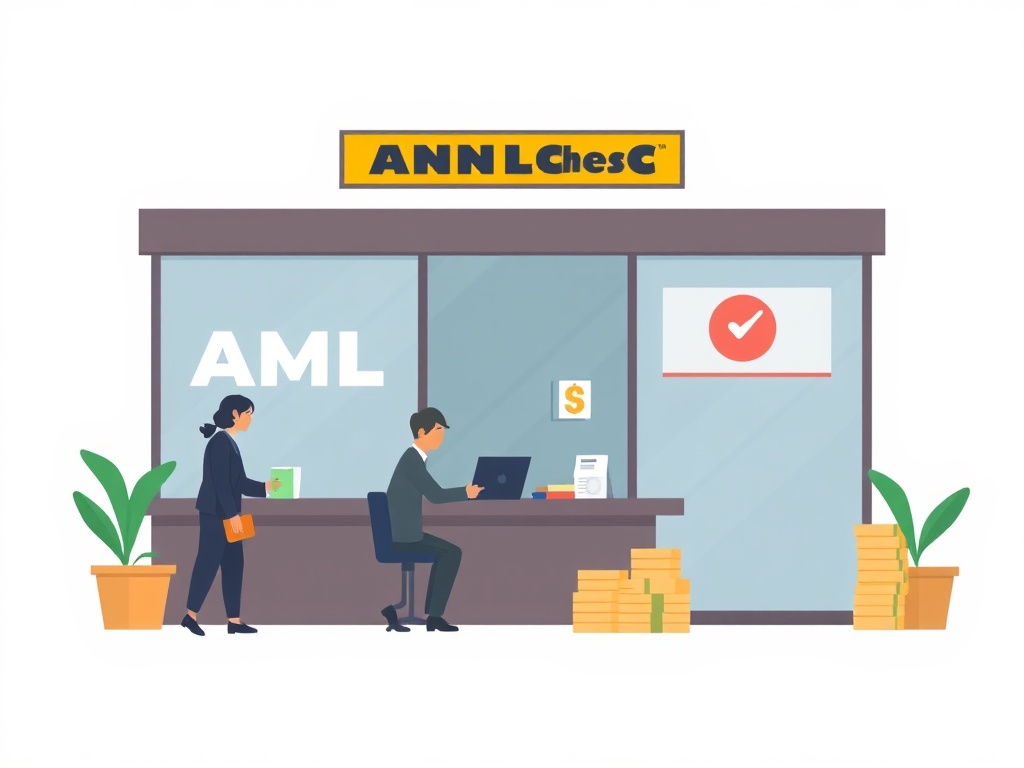
In the financial services sector, pawnbrokers operate in a unique position where they facilitate short-term loans secured by personal property. However, this industry is not exempt from the rigorous Anti-Money Laundering (AML) regulations that govern financial transactions worldwide. An AML check pawnbroker AML process is not just a legal obligation—it is a critical safeguard against financial crime, protecting both the business and the broader economy.
This comprehensive guide explores the importance of AML compliance for pawnbrokers, the specific regulations they must follow, and the practical steps involved in conducting an effective AML check. Whether you're a seasoned pawnbroker or new to the industry, understanding these requirements is essential to maintaining a lawful and reputable operation.
The Importance of AML Compliance for Pawnbrokers
Pawnbrokers play a vital role in the financial ecosystem by providing accessible credit to individuals who may not qualify for traditional bank loans. However, the nature of pawn transactions—where cash changes hands quickly and anonymity can be a concern—makes them vulnerable to misuse by criminals seeking to launder money. This is why an AML check pawnbroker AML system is not optional; it is a legal and ethical necessity.
Why Pawnbrokers Are Targeted by Money Launderers
Money launderers often exploit industries with high cash transactions and minimal regulatory oversight. Pawnbrokers fit this profile for several reasons:
- Cash-intensive transactions: Pawn loans are typically disbursed in cash, making it difficult to trace the origin of funds.
- Lack of immediate digital records: Unlike bank transfers, pawn transactions may not leave an immediate electronic footprint.
- High-value items as collateral: Luxury goods, jewelry, and electronics can be easily resold, providing a quick way to "clean" illicit funds.
- Minimal customer identification: In some jurisdictions, pawnbrokers historically required less stringent ID verification than banks.
These factors make pawnbrokers attractive targets for criminals looking to integrate illicit funds into the legitimate economy. Implementing a robust AML check helps mitigate these risks by ensuring transparency and accountability in every transaction.
The Legal Consequences of Non-Compliance
Failure to comply with AML regulations can result in severe penalties, including:
- Heavy fines: Regulatory bodies such as FinCEN (Financial Crimes Enforcement Network) in the U.S. and the FCA (Financial Conduct Authority) in the UK can impose substantial monetary penalties.
- Reputational damage: A single AML violation can erode customer trust and damage a pawnbroker’s standing in the community.
- Criminal charges: In extreme cases, non-compliance may lead to criminal prosecution for the business owner or employees.
- License revocation: Regulatory authorities may suspend or revoke a pawnbroker’s operating license, effectively shutting down the business.
Given these risks, an AML check pawnbroker AML system is not just about avoiding penalties—it’s about ensuring the long-term viability of the business.
The Role of AML Checks in Protecting the Pawnbroking Industry
Beyond legal compliance, AML checks serve several broader purposes:
- Deterring financial crime: By implementing thorough verification processes, pawnbrokers can discourage criminals from attempting to use their services.
- Enhancing customer trust: Customers are more likely to engage with a pawnbroker who demonstrates a commitment to ethical practices and regulatory compliance.
- Supporting law enforcement: Detailed transaction records help authorities track and investigate suspicious activities, contributing to broader efforts against money laundering.
- Improving operational efficiency: Modern AML software can streamline compliance processes, reducing the administrative burden on staff.
In summary, an AML check is a cornerstone of responsible pawnbroking, balancing legal obligations with business integrity.
Key AML Regulations Affecting Pawnbrokers
Pawnbrokers must navigate a complex web of AML regulations that vary by jurisdiction. Understanding these laws is the first step in implementing an effective AML check pawnbroker AML system. Below are the most critical regulations that pawnbrokers need to be aware of.
1. The Bank Secrecy Act (BSA) and FinCEN Requirements (U.S.)
The Bank Secrecy Act (BSA), enacted in 1970, is the primary AML legislation in the United States. The Financial Crimes Enforcement Network (FinCEN), a bureau of the U.S. Department of the Treasury, enforces BSA compliance. Key requirements for pawnbrokers include:
- Customer Identification Program (CIP): Pawnbrokers must verify the identity of customers before completing a transaction. This includes collecting and retaining records of government-issued IDs.
- Suspicious Activity Reports (SARs): If a transaction appears suspicious (e.g., unusually large cash transactions or structuring), pawnbrokers must file a SAR with FinCEN within 30 days.
- Currency Transaction Reports (CTRs): Transactions exceeding $10,000 in cash must be reported to FinCEN using a CTR form.
- Recordkeeping: Pawnbrokers must maintain records of all transactions for at least five years.
FinCEN has explicitly stated that pawnbrokers are considered "financial institutions" under the BSA, meaning they are subject to the same AML obligations as banks and other financial entities.
2. The Proceeds of Crime Act (POCA) and Money Laundering Regulations (UK)
In the United Kingdom, the Proceeds of Crime Act (POCA) 2002 and the Money Laundering Regulations 2017 govern AML compliance. Key obligations for UK pawnbrokers include:
- Customer Due Diligence (CDD): Pawnbrokers must verify the identity of customers and assess the risk of money laundering. Enhanced due diligence (EDD) is required for high-risk customers.
- Suspicious Activity Reports (SARs): Any suspicious transaction must be reported to the National Crime Agency (NCA) via a SAR.
- Recordkeeping: Transaction records must be kept for at least five years.
- Training: Staff must receive regular AML training to recognize and report suspicious activities.
The UK’s Financial Conduct Authority (FCA) oversees compliance, and failure to adhere to these regulations can result in fines, criminal charges, or business closure.
3. The European Union’s 4th and 5th AML Directives
For pawnbrokers operating in the European Union, the 4th AML Directive (2015/849) and the 5th AML Directive (2018/843) set the framework for AML compliance. Key requirements include:
- Risk-based approach: Pawnbrokers must assess the money laundering risks associated with their business and implement proportionate measures.
- Beneficial ownership transparency: Customers must disclose any beneficial owners (e.g., individuals controlling the transaction).
- Enhanced due diligence for high-risk sectors: Transactions involving high-value goods or cash-intensive businesses require additional scrutiny.
- Centralized beneficial ownership registers: EU member states must maintain registers of beneficial owners, which pawnbrokers may need to consult.
These directives are transposed into national law by EU member states, so pawnbrokers must also comply with local regulations.
4. Other International AML Frameworks
Pawnbrokers operating in other regions must also consider local AML laws, such as:
- Canada’s Proceeds of Crime (Money Laundering) and Terrorist Financing Act (PCMLTFA): Requires reporting entities (including pawnbrokers) to implement AML programs, conduct CDD, and file suspicious transaction reports.
- Australia’s Anti-Money Laundering and Counter-Terrorism Financing Act (AML/CTF Act): Mandates that pawnbrokers report suspicious matters and maintain transaction records.
- Singapore’s Corruption, Drug Trafficking and Other Serious Crimes (Confiscation of Benefits) Act: Requires financial institutions (including pawnbrokers) to report suspicious transactions.
Given the global nature of financial crime, pawnbrokers must stay informed about international AML standards to ensure compliance in all jurisdictions where they operate.
Step-by-Step Guide to Conducting an AML Check for Pawnbrokers
Implementing an effective AML check pawnbroker AML process requires a systematic approach. Below is a step-by-step guide to help pawnbrokers establish and maintain compliance with AML regulations.
Step 1: Develop an AML Compliance Program
Every pawnbroker should have a written AML compliance program that outlines policies, procedures, and responsibilities. This program should include:
- Internal controls: Designate a compliance officer responsible for overseeing AML efforts.
- Risk assessment: Identify and assess the specific money laundering risks associated with your business (e.g., cash transactions, high-value items).
- Customer identification procedures: Establish clear guidelines for verifying customer identities.
- Training programs: Ensure all staff are trained on AML regulations and suspicious activity recognition.
- Independent testing: Conduct periodic audits to evaluate the effectiveness of your AML program.
A well-documented compliance program demonstrates to regulators that your pawnbroker is committed to preventing money laundering.
Step 2: Implement Customer Due Diligence (CDD) and Know Your Customer (KYC) Procedures
Customer Due Diligence (CDD) and Know Your Customer (KYC) are the foundation of an effective AML check. These procedures help pawnbrokers verify the identity of customers and assess their risk profile. Key steps include:
Collecting Customer Information
Before completing a transaction, pawnbrokers must collect the following information:
- Full legal name: As it appears on government-issued ID.
- Date of birth: To verify the customer’s age and identity.
- Permanent address: A utility bill or bank statement may be required as proof.
- Government-issued ID: Such as a passport, driver’s license, or national ID card.
- Taxpayer Identification Number (TIN): In some jurisdictions, this is required for reporting purposes.
Verifying Customer Identity
Pawnbrokers must verify the authenticity of the provided documents. This can be done through:
- Manual verification: Checking IDs against government databases or using UV lights to detect forgeries.
- Automated verification: Using AML software that cross-references IDs with global databases.
- Biometric verification: Some advanced systems use facial recognition or fingerprint scanning to confirm identity.
Assessing Customer Risk
Not all customers pose the same level of risk. Pawnbrokers should categorize customers based on their risk profile:
- Low-risk customers: Regular customers with a history of legitimate transactions.
- Medium-risk customers: Customers who occasionally transact in cash or deal with high-value items.
- High-risk customers: New customers, those using intermediaries, or those involved in transactions that lack a clear economic purpose.
High-risk customers may require Enhanced Due Diligence (EDD), which includes additional verification steps and ongoing monitoring.
Step 3: Monitoring Transactions for Suspicious Activity
An effective AML check doesn’t end with customer verification—it requires ongoing monitoring of transactions to detect suspicious behavior. Pawnbrokers should look for the following red flags:
Common Suspicious Transaction Indicators
- Unusually large cash transactions: Transactions significantly above the customer’s typical spending pattern.
- Structuring: Breaking large transactions into smaller amounts to avoid reporting thresholds (e.g., $9,900 instead of $10,000).
- Lack of a clear economic purpose: Transactions where the customer cannot explain the source of funds or the purpose of the loan.
- Use of intermediaries: Customers who act on behalf of others without a valid reason.
- Frequent pawning and redeeming of the same item: This could indicate attempts to launder money through artificial transactions.
- Transactions involving high-risk jurisdictions: Countries known for weak AML controls or high levels of corruption.
Using Technology for Transaction Monitoring
Manual monitoring is time-consuming and prone to errors. Modern AML software can automate the process by:
- Flagging unusual transactions: Using algorithms to detect patterns that deviate from normal behavior.
- Generating alerts: Notifying staff when a transaction meets predefined suspicious criteria.
- Maintaining audit trails: Recording all transactions for regulatory reporting and internal audits.
Investing in AML software can significantly improve the efficiency and accuracy of your AML check pawnbroker AML process.
Step 4: Reporting Suspicious Activity
If a transaction appears suspicious, pawnbrokers have a legal obligation to report it to the appropriate authorities. The reporting process typically involves:
Filing a Suspicious Activity Report (SAR)
In the U.S., pawnbrokers must file a SAR with FinCEN if they suspect a transaction involves money laundering or other financial crimes. The SAR includes:
- Customer details: Name, address, and other identifying information.
- Transaction details: Amount, date, and nature of the transaction.
- Reason for suspicion: A clear explanation of why the transaction appears suspicious.
In the UK, pawnbrokers must file a SAR with the National Crime Agency (NCA) if they have reasonable grounds to suspect money laundering.
Timing and Confidentiality
- Timing: SARs must be filed within a specified timeframe (e.g., 30 days in the U.S., immediately in the UK if there’s a risk of tipping off the customer).
- Confidentiality: The existence of a SAR must remain confidential to avoid alerting the customer and potentially obstructing an investigation.
Step 5: Recordkeeping and Retention
AML regulations require pawnbrokers to maintain detailed records of all transactions and customer information. These records must be kept for a minimum of five years (or longer in some jurisdictions) and made available to regulators upon request. Key records include:
- Customer identification documents: Copies of IDs, proof of address, and other verification records.
- Transaction records: Details of all loans, repayments, and sales of pawned items.
- SARs and CTRs: Copies of all suspicious activity and currency transaction reports filed.
- Audit logs: Records of staff access to customer data and transaction histories.
Digital recordkeeping systems are recommended for efficiency and security, but physical records must be stored securely as well.
Best Practices for Pawnbrokers to Enhance AML Compliance
While regulatory requirements provide a baseline for AML compliance, adopting best practices can further strengthen a pawnbroker’s defenses against financial crime. Below are some strategies to enhance your AML check pawnbroker AML process.
1. Invest in AML Software and Automation
Manual AML processes are labor-intensive and prone to human error. Investing in AML software can streamline compliance by:
- Automating customer verification: Software
 James RichardsonSenior Crypto Market Analyst
As a Senior Crypto Market Analyst with over a decade of experience in digital asset markets, I’ve observed that pawnbrokers—traditionally cash-intensive businesses—are increasingly integrating cryptocurrency services to stay competitive. However, this evolution introduces significant Anti-Money Laundering (AML) risks that cannot be overlooked. The pawnbroking sector, which has historically relied on physical collateral and face-to-face transactions, now faces the challenge of adapting to digital asset transactions where anonymity and cross-border transfers are far easier. An AML check pawnbroker AML framework is no longer optional; it’s a critical compliance necessity to prevent illicit financial flows from undermining both the pawnbroking industry and the broader crypto ecosystem.
From a practical standpoint, pawnbrokers venturing into crypto must implement robust AML checks that go beyond traditional KYC (Know Your Customer) procedures. This includes real-time transaction monitoring, blockchain forensics to trace fund origins, and automated screening against sanctions lists and high-risk wallets. The decentralized nature of cryptocurrencies means that a single lapse in due diligence can expose a pawnbroker to severe regulatory penalties or reputational damage. Institutions like Chainalysis and Elliptic have demonstrated how blockchain analytics can flag suspicious activities, but the pawnbroking sector must proactively adopt these tools rather than react after an incident. Failure to do so risks not only legal repercussions but also erodes trust in an industry already under scrutiny for its cash-handling practices.