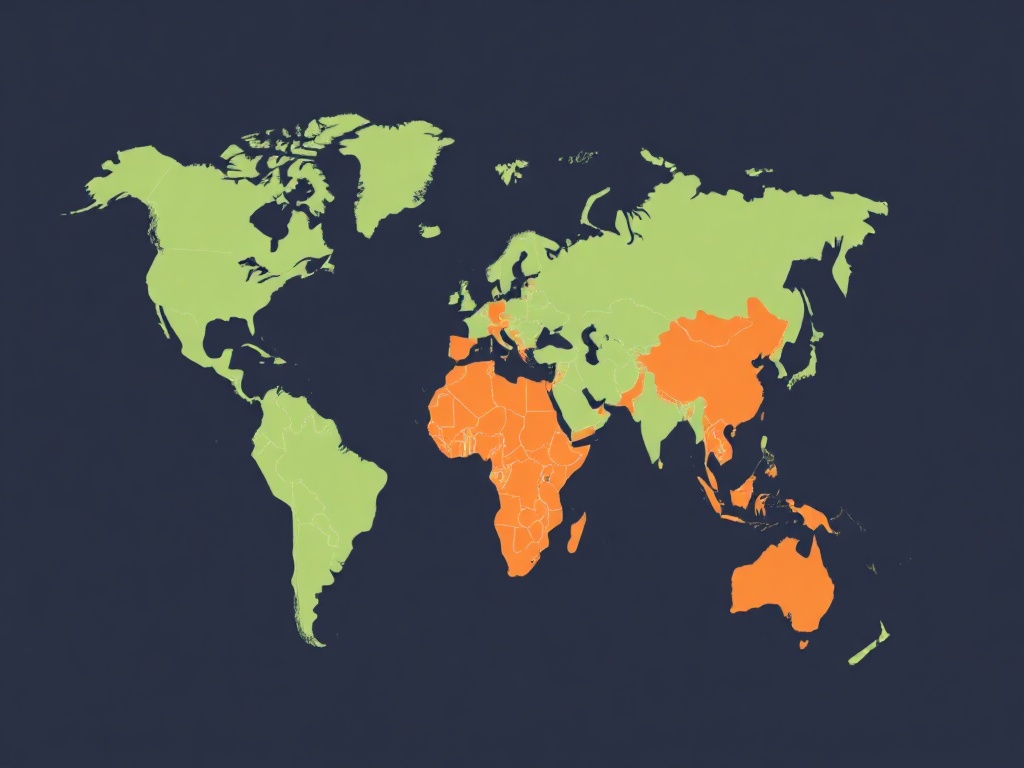
In the global fight against financial crime, Anti-Money Laundering (AML) compliance remains a cornerstone for financial institutions, businesses, and regulatory bodies. One of the most critical aspects of AML compliance is conducting thorough AML checks on high-risk jurisdictions identified by the Financial Action Task Force (FATF). These jurisdictions are flagged due to deficiencies in their AML/Counter-Terrorist Financing (CFT) regimes, making them potential hotspots for illicit financial activities.
This guide explores the importance of AML checks for FATF high-risk jurisdictions, the risks associated with these regions, and best practices for businesses to mitigate exposure. Whether you're a compliance officer, risk manager, or business owner, understanding how to navigate these challenges is essential for maintaining regulatory adherence and safeguarding your operations.
---What Are FATF High-Risk Jurisdictions?
The Role of the Financial Action Task Force (FATF)
The Financial Action Task Force (FATF) is an intergovernmental organization established in 1989 to combat money laundering, terrorist financing, and other threats to the integrity of the international financial system. Headquartered in Paris, the FATF sets global standards and promotes the effective implementation of legal, regulatory, and operational measures to combat financial crime.
The FATF maintains two key lists that are critical for AML compliance:
- FATF Grey List: Jurisdictions under increased monitoring due to strategic deficiencies in their AML/CFT frameworks. These countries have committed to resolving identified issues within agreed timeframes.
- FATF Black List: Jurisdictions subject to a "call for action" due to severe AML/CFT deficiencies. These countries face significant restrictions and are often isolated from the global financial system.
As of 2024, the FATF Grey List includes countries such as Albania, Barbados, Burkina Faso, Cambodia, Cayman Islands, Gibraltar, Haiti, Jamaica, Jordan, Mali, Mozambique, Panama, Philippines, Senegal, South Africa, Syria, Tanzania, Turkey, Uganda, United Arab Emirates (UAE), and Yemen. The Black List, though less common, has historically included jurisdictions like North Korea and Iran.
Why Are These Jurisdictions Considered High-Risk?
FATF high-risk jurisdictions are flagged for several reasons, including:
- Weak AML/CFT Frameworks: Inadequate laws, regulations, or enforcement mechanisms to detect and prevent financial crimes.
- Corruption and Governance Issues: High levels of corruption, lack of transparency, and weak rule of law create environments conducive to money laundering.
- Terrorist Financing Risks: Jurisdictions with ties to terrorist organizations or insufficient controls to prevent the flow of funds to such groups.
- Tax Haven Characteristics: Some jurisdictions offer secrecy and low tax rates, attracting illicit funds and complicating AML checks.
- Sanctions Evasion: Countries with poor compliance with international sanctions, allowing sanctioned entities to bypass restrictions.
For businesses, operating in or with these jurisdictions without robust AML checks for FATF high-risk jurisdictions can lead to severe regulatory penalties, reputational damage, and financial losses.
---The Importance of AML Checks for FATF High-Risk Jurisdictions
Regulatory Compliance and Legal Obligations
Financial institutions and businesses are legally obligated to conduct AML checks on high-risk jurisdictions as part of their compliance programs. Regulatory bodies such as the U.S. Financial Crimes Enforcement Network (FinCEN), the European Union’s 6th Anti-Money Laundering Directive (6AMLD), and the UK’s Money Laundering Regulations mandate enhanced due diligence (EDD) for transactions involving these regions.
Failure to comply with these requirements can result in:
- Heavy Fines: Regulatory authorities impose substantial penalties for non-compliance. For example, in 2020, Deutsche Bank was fined $150 million by U.S. regulators for AML failures related to high-risk jurisdictions.
- Reputational Damage: Associations with high-risk jurisdictions can erode customer trust and investor confidence.
- Criminal Liability: In extreme cases, individuals and organizations may face criminal charges for facilitating money laundering.
Mitigating Financial Crime and Illicit Funds
Conducting thorough AML checks for FATF high-risk jurisdictions is essential for preventing financial crime. Money laundering schemes often exploit weak regulatory environments to move illicit funds across borders. By implementing robust screening processes, businesses can:
- Identify Suspicious Transactions: Detect unusual patterns or transactions that may indicate money laundering or terrorist financing.
- Prevent Sanctions Violations: Ensure compliance with international sanctions by screening against lists such as the OFAC (Office of Foreign Assets Control) SDN List.
- Enhance Due Diligence: Gather comprehensive information about counterparties, beneficial owners, and transaction purposes to assess risk accurately.
For example, a bank processing a wire transfer from a high-risk jurisdiction should verify the source of funds, the identity of the sender and receiver, and the legitimacy of the transaction. Without proper AML checks, such transactions could inadvertently facilitate criminal activities.
Protecting Business Reputation and Customer Trust
In today’s interconnected world, reputation is a valuable asset. Businesses that fail to conduct adequate AML checks for FATF high-risk jurisdictions risk being perceived as complicit in financial crime. This can lead to:
- Loss of Customers: Clients and partners may sever ties with businesses that are linked to high-risk jurisdictions.
- Investor Withdrawals: Shareholders and investors may divest from companies embroiled in compliance scandals.
- Media Scrutiny: High-profile AML failures often attract negative media attention, further damaging a company’s image.
On the other hand, businesses that prioritize AML compliance demonstrate a commitment to ethical practices and financial integrity, fostering long-term trust with stakeholders.
---Key Challenges in Conducting AML Checks for High-Risk Jurisdictions
Complex Regulatory Landscape
The global nature of AML compliance means that businesses must navigate a patchwork of regulations across different jurisdictions. For example:
- U.S. Regulations: The Bank Secrecy Act (BSA) and Patriot Act require financial institutions to implement AML programs, including screening for high-risk jurisdictions.
- EU Regulations: The 6th Anti-Money Laundering Directive (6AMLD) mandates enhanced due diligence for transactions involving high-risk third countries.
- UK Regulations: The Money Laundering Regulations 2017 require businesses to conduct risk assessments and apply EDD measures for high-risk jurisdictions.
Keeping up with these evolving regulations can be challenging, particularly for multinational corporations operating in multiple jurisdictions.
Data Quality and Accuracy
Effective AML checks for FATF high-risk jurisdictions rely on accurate and up-to-date data. However, businesses often face challenges such as:
- Incomplete or Outdated Information: Publicly available data on beneficial ownership, sanctions lists, and PEPs (Politically Exposed Persons) may be incomplete or outdated.
- False Positives: Screening tools may flag legitimate transactions as high-risk due to overly broad criteria, leading to unnecessary delays and costs.
- Data Overload: Businesses may struggle to process vast amounts of data efficiently, increasing the risk of oversight.
To address these challenges, businesses should invest in advanced AML software and data analytics tools that provide real-time updates and reduce false positives.
Cultural and Operational Differences
High-risk jurisdictions often have unique cultural, legal, and operational environments that complicate AML checks. For example:
- Informal Financial Systems: Some jurisdictions rely heavily on informal financial networks, such as hawala systems, which are difficult to monitor.
- Corruption and Bribery: In regions with high corruption, businesses may face pressure to bypass AML controls or falsify documentation.
- Limited Regulatory Oversight: Weak enforcement of AML laws in some jurisdictions means that businesses must conduct their own due diligence to assess risk accurately.
Businesses operating in these regions must adapt their AML strategies to account for these differences, often requiring on-the-ground expertise and local partnerships.
---Best Practices for Conducting AML Checks on FATF High-Risk Jurisdictions
Implement a Risk-Based Approach
A risk-based approach is the foundation of effective AML compliance. Businesses should:
- Conduct Risk Assessments: Identify and evaluate the specific risks associated with high-risk jurisdictions, including the nature of transactions, customer profiles, and geographic exposure.
- Apply Enhanced Due Diligence (EDD): For transactions involving high-risk jurisdictions, implement EDD measures such as:
- Obtaining additional documentation to verify the source of funds.
- Conducting enhanced background checks on beneficial owners and counterparties.
- Monitoring transactions in real-time for suspicious activity.
- Segment Customers and Transactions: Prioritize high-risk customers and transactions for more frequent and rigorous screening.
By tailoring AML controls to the specific risks posed by high-risk jurisdictions, businesses can allocate resources more effectively and reduce compliance costs.
Leverage Technology and Automation
Manual AML checks are time-consuming and prone to errors. Businesses should leverage technology to streamline the process, including:
- Automated Screening Tools: Use AML software to screen customers, transactions, and counterparties against sanctions lists, PEPs databases, and high-risk jurisdictions in real-time.
- AI and Machine Learning: Advanced analytics can identify patterns and anomalies indicative of money laundering, reducing false positives and improving detection rates.
- Blockchain Analytics: For businesses operating in cryptocurrency or digital asset markets, blockchain analytics tools can trace illicit transactions and identify high-risk addresses.
For example, Chainalysis and Elliptic provide blockchain analytics solutions that help businesses detect and prevent illicit transactions involving high-risk jurisdictions.
Stay Updated on FATF and Regulatory Changes
The FATF regularly updates its lists of high-risk jurisdictions and issues new guidance on AML/CFT compliance. Businesses must stay informed to ensure their AML programs remain effective. Key steps include:
- Monitor FATF Announcements: The FATF publishes updates on its website and through periodic reports. Subscribing to regulatory alerts can help businesses stay ahead of changes.
- Engage with Industry Groups: Organizations such as the Wolfsberg Group and ACAMS (Association of Certified Anti-Money Laundering Specialists) provide resources and training on AML best practices.
- Conduct Regular Audits: Internal and external audits can identify gaps in AML programs and ensure compliance with evolving regulations.
For instance, when the FATF added Uganda and Burkina Faso to its Grey List in 2023, businesses operating in these regions had to reassess their AML controls and enhance due diligence measures.
Train Employees and Foster a Culture of Compliance
AML compliance is not solely the responsibility of the compliance team; it requires a company-wide commitment. Businesses should:
- Provide Regular Training: Educate employees on AML risks, red flags, and reporting procedures. Training should be tailored to specific roles, such as frontline staff, risk managers, and senior executives.
- Encourage Whistleblowing: Establish anonymous reporting channels for employees to report suspicious activity without fear of retaliation.
- Promote Ethical Leadership: Senior management should lead by example, emphasizing the importance of AML compliance and ethical decision-making.
A strong compliance culture reduces the likelihood of human error and fosters a proactive approach to identifying and mitigating AML risks.
---Case Studies: AML Failures and Lessons Learned
Case Study 1: Danske Bank’s AML Scandal
One of the most infamous AML failures involved Danske Bank, which was found to have facilitated over $230 billion in suspicious transactions through its Estonian branch between 2007 and 2015. The transactions primarily involved high-risk jurisdictions, including Russia, Moldova, and Azerbaijan.
Key failures included:
- Inadequate AML Controls: The bank failed to implement proper customer due diligence and transaction monitoring.
- Lack of Oversight: Senior management was unaware of the scale of the problem, and internal audits were ineffective.
- Regulatory Non-Compliance: The bank did not conduct adequate AML checks for FATF high-risk jurisdictions, despite warnings from regulators.
Consequences:
- The bank was fined $2 billion by U.S. and European regulators.
- Its CEO and other executives resigned amid the scandal.
- The bank’s reputation was severely damaged, leading to a loss of customers and investor confidence.
Lesson Learned: Businesses must implement robust AML programs, conduct regular audits, and ensure senior management is actively engaged in compliance efforts.
Case Study 2: HSBC’s AML Enforcement Action
In 2012, HSBC was fined $1.9 billion by U.S. authorities for AML failures, including processing transactions for high-risk jurisdictions such as Mexico, Iran, and Saudi Arabia without adequate controls.
Key failures included:
- Weak Transaction Monitoring: HSBC’s AML systems failed to detect suspicious transactions, including those linked to drug cartels and terrorist financing.
- Inadequate Staffing: The bank had insufficient compliance staff to monitor high-risk transactions effectively.
- Failure to Screen High-Risk Jurisdictions: HSBC did not conduct proper AML checks for FATF high-risk jurisdictions, despite being aware of the risks.
Consequences:
- The bank was placed under a deferred prosecution agreement, requiring significant reforms.
- HSBC was required to hire an independent monitor to oversee its AML program.
- The scandal led to increased regulatory scrutiny of the banking sector.
Lesson Learned: Even large, well-established institutions must prioritize AML compliance and invest in technology and staffing to mitigate risks.
---Future Trends in AML Compliance for High-Risk Jurisdictions
The Rise of Digital Identity and Biometrics
As financial transactions become increasingly digital, businesses are turning to digital identity verification and biometric authentication to enhance AML checks. These technologies can:
- Verify Customer Identities: Use government-issued IDs, facial recognition, and liveness detection to confirm the identity of customers, particularly in high-risk jurisdictions.
- Detect Fraud: Identify synthetic identities and impersonation attempts, reducing the risk of money laundering.
- Streamline Onboarding: Accelerate the customer onboarding process while maintaining robust AML controls.
For example, Jumio and Onfido provide digital identity verification solutions that help businesses comply with AML regulations while improving the customer experience.
Increased Focus on Cryptocurrency and Virtual Assets
The rise of cryptocurrencies and virtual assets has introduced new challenges for AML compliance, particularly in high-risk jurisdictions. Key trends include:
- Regulation of Crypto Exchanges: Governments are imposing stricter AML requirements on cryptocurrency exchanges, including mandatory registration and transaction monitoring.
- Travel Rule Compliance: The FATF Travel Rule requires virtual asset service providers (VASPs
 David ChenDigital Assets Strategist
AML Check for FATF High-Risk Jurisdictions: A Strategic Imperative for Digital Asset Compliance
As a digital assets strategist with a background in traditional finance and quantitative analysis, I’ve observed that the FATF’s high-risk jurisdictions list is not just a regulatory checkbox—it’s a critical risk management tool for institutions operating in the crypto space. The FATF’s recommendations, particularly Recommendation 15 on virtual assets, mandate that VASPs (Virtual Asset Service Providers) conduct enhanced due diligence (EDD) when transacting with entities in jurisdictions flagged for strategic AML/CFT deficiencies. From a market microstructure perspective, ignoring these jurisdictions isn’t just a compliance risk; it’s a liquidity and reputational hazard. High-risk jurisdictions often correlate with higher instances of illicit activity, including mixers, darknet markets, and unlicensed exchanges, which can expose compliant firms to counterparty risk and regulatory scrutiny. My on-chain analytics work has shown that transactions originating from or routed through these jurisdictions frequently exhibit patterns consistent with layering or structuring, making them prime candidates for transaction monitoring alerts.
Practically, firms must integrate FATF high-risk jurisdiction screening into their AML frameworks with the same rigor as traditional financial institutions. This means leveraging real-time sanctions screening tools, geolocation IP tracking, and behavioral analytics to flag suspicious activity early. For example, a VASP might use clustering algorithms to identify wallets associated with high-risk jurisdictions and then apply risk-based transaction limits or enhanced monitoring. However, the challenge lies in balancing compliance with operational efficiency—over-blocking transactions can stifle legitimate business, while under-screening invites regulatory penalties. My experience suggests that the most resilient firms adopt a tiered approach: automated AML checks for high-risk jurisdictions, followed by manual review for borderline cases. Additionally, staying ahead of FATF updates is non-negotiable; jurisdictions can move on or off the list, and firms must adapt their policies accordingly. In an industry where trust is the most valuable asset, proactive AML checks for FATF high-risk jurisdictions aren’t just a regulatory obligation—they’re a competitive advantage.