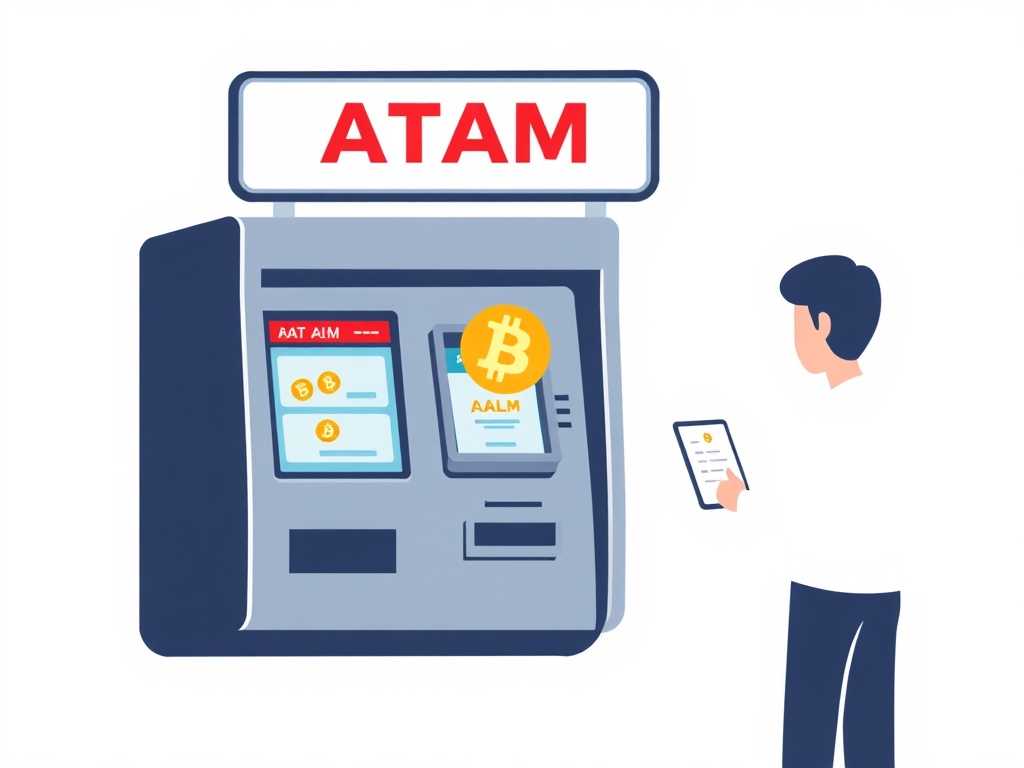
The intersection of cryptocurrency and traditional financial systems has introduced unique challenges, particularly in the realm of anti-money laundering (AML) compliance. One such challenge is the AML check Bitcoin ATM cash-out risk, which refers to the potential for illicit activities during cash withdrawal transactions at Bitcoin ATMs. As Bitcoin ATMs become more prevalent, regulators and financial institutions are increasingly focused on mitigating these risks through robust AML checks. This article explores the mechanisms, risks, and solutions associated with AML checks in Bitcoin ATM cash-out scenarios, providing a comprehensive overview for stakeholders in the financial and cryptocurrency sectors.
What is AML Check Bitcoin ATM Cash-Out Risk?
The AML check Bitcoin ATM cash-out risk arises when cash withdrawals from Bitcoin ATMs are not adequately monitored or verified, creating opportunities for money laundering, fraud, or other financial crimes. Unlike traditional banking systems, Bitcoin ATMs operate with a degree of anonymity, which can be exploited if proper AML protocols are not in place. This risk is particularly significant because cash-out transactions often involve large sums of money, making them attractive targets for bad actors.
The Role of AML Checks in Preventing Money Laundering
AML checks are designed to identify and prevent transactions that may be linked to illegal activities. In the context of Bitcoin ATMs, these checks involve verifying the identity of users, monitoring transaction patterns, and flagging suspicious behavior. For example, an AML check might trigger an alert if a user attempts to withdraw a large amount of Bitcoin in a short period or if the transaction is linked to a high-risk jurisdiction. By implementing these checks, financial institutions and ATM operators can reduce the likelihood of their platforms being used for illicit purposes.
How Bitcoin ATMs Trigger AML Checks
Bitcoin ATMs are equipped with software that automatically initiates AML checks during cash-out transactions. These checks typically involve cross-referencing user data with government databases, such as the Financial Action Task Force (FATF) guidelines or local regulatory requirements. For instance, if a user’s identity is not properly verified or if the transaction amount exceeds a predefined threshold, the system may pause the transaction and require additional verification. This process is critical in ensuring that the AML check Bitcoin ATM cash-out risk is minimized before any funds are transferred.
The Mechanics of AML Checks in Bitcoin ATM Transactions
Understanding how AML checks function in Bitcoin ATM cash-outs requires a closer look at the technical and procedural aspects of these systems. From user verification to transaction monitoring, each step plays a role in mitigating the AML check Bitcoin ATM cash-out risk.
User Verification and KYC Processes
Know Your Customer (KYC) procedures are a cornerstone of AML compliance. When a user initiates a cash-out transaction at a Bitcoin ATM, they are typically required to provide identification documents, such as a government-issued ID or passport. This information is then cross-checked against databases to confirm the user’s identity. If discrepancies are found, the system may flag the transaction for further review. This step is essential in preventing bad actors from using stolen identities to launder money through Bitcoin ATMs.
Transaction Monitoring and Red Flags
Once a transaction is initiated, AML software continuously monitors it for suspicious activity. Red flags may include unusually large withdrawals, frequent transactions from the same user, or transfers to high-risk countries. For example, if a user attempts to cash out $10,000 in Bitcoin within an hour, the system might trigger an AML check to verify the legitimacy of the transaction. These monitoring mechanisms are designed to detect patterns that could indicate money laundering or other financial crimes, thereby reducing the AML check Bitcoin ATM cash-out risk.
Risks Associated with Bitcoin ATM Cash-Outs
While Bitcoin ATMs offer convenience, they also present significant risks, particularly in the absence of effective AML checks. The AML check Bitcoin ATM cash-out risk is not just a theoretical concern; it has real-world implications for both operators and users.
Money Laundering Through Bitcoin ATMs
One of the primary risks associated with Bitcoin ATM cash-outs is the potential for money laundering. Criminals can use these machines to convert illicitly obtained Bitcoin into cash, which can then be used for further illegal activities. Without proper AML checks, it becomes easier for bad actors to bypass traditional financial oversight. For instance, a user might deposit stolen Bitcoin into an ATM and withdraw cash without any verification, effectively laundering the funds. This highlights the critical need for robust AML protocols to address the AML check Bitcoin ATM cash-out risk.
Regulatory Compliance Challenges
Regulatory bodies around the world are increasingly scrutinizing Bitcoin ATMs due to their potential for misuse. Compliance with AML regulations varies by jurisdiction, creating a complex landscape for operators. In some regions, failure to implement adequate AML checks can result in hefty fines or even the shutdown of the ATM. This regulatory pressure underscores the importance of addressing the AML check Bitcoin ATM cash-out risk to avoid legal repercussions and maintain operational integrity.
Compliance Measures to Mitigate AML Check Bitcoin ATM Cash-Out Risk
To effectively manage the AML check Bitcoin ATM cash-out risk, operators must adopt comprehensive compliance strategies. These measures not only protect the integrity of the financial system but also build trust with users.
Implementing Robust AML Software Solutions
Advanced AML software is essential for detecting and preventing suspicious transactions. These systems use machine learning algorithms to analyze transaction data in real time, identifying patterns that may indicate money laundering. For example, if a user’s transaction history shows multiple small withdrawals followed by a large cash-out, the software can flag this as a potential risk. By investing in such technology, operators can significantly reduce the AML check Bitcoin ATM cash-out risk and ensure compliance with regulatory standards.
Staff Training and Awareness
Human oversight remains a critical component of AML compliance. Staff operating Bitcoin ATMs must be trained to recognize red flags and respond appropriately to suspicious transactions. This includes understanding the latest AML regulations and knowing how to escalate flagged transactions for further investigation. Regular training programs can help staff stay updated on evolving threats and best practices, thereby enhancing the effectiveness of AML checks and mitigating the AML check Bitcoin ATM cash-out risk.
Case Studies and Real-World Implications
Examining real-world examples provides valuable insights into the challenges and solutions related to the AML check Bitcoin ATM cash-out risk.
Notable Incidents Involving Bitcoin ATM Cash-Outs
Several high-profile cases have highlighted the vulnerabilities of Bitcoin ATMs in the absence of proper AML checks. For instance, in 2021, a Bitcoin ATM in the United States was used to launder over $1 million in illicit funds. The operator failed to implement adequate KYC procedures, allowing criminals to convert stolen Bitcoin into cash. This incident underscores the importance of robust AML checks in preventing such activities and addressing the AML check Bitcoin ATM cash-out risk.
Lessons Learned from AML Check Failures
Failures in AML checks often stem from inadequate technology, poor user verification, or lack of staff training. These cases serve as cautionary tales for operators, emphasizing the need for a multi-layered approach to compliance. By learning from past mistakes, the industry can develop more effective strategies to mitigate the AML check Bitcoin ATM cash-out risk and ensure the safe operation of Bitcoin ATMs.
In conclusion, the AML check Bitcoin ATM cash-out risk is a multifaceted issue that requires a combination of technological solutions, regulatory adherence, and human oversight. As Bitcoin ATMs continue to grow in popularity, addressing this risk will be essential for maintaining the integrity of both the cryptocurrency and traditional financial systems. By understanding the mechanisms, risks, and compliance measures associated with AML checks, stakeholders can work together to create a safer and more secure financial environment.

Understanding the AML Check Bitcoin ATM Cash-Out Risk: A Critical Component of Crypto Compliance
As James Richardson, Senior Crypto Market Analyst with over 12 years of experience in digital asset analysis and blockchain market research, I’ve observed that the AML check Bitcoin ATM cash-out risk is a pressing concern for both regulators and operators. My work has consistently focused on cryptocurrency valuation models and DeFi risk assessment, but the intersection of anti-money laundering (AML) protocols with Bitcoin ATM transactions reveals unique vulnerabilities. Cash-outs at Bitcoin ATMs, while convenient for users, create a high-risk environment for illicit activity if AML checks are not rigorously enforced. The decentralized nature of cryptocurrencies, combined with the anonymity often associated with cash transactions, makes it challenging to trace the origin of funds. This risk is amplified when AML checks are either bypassed or inadequately implemented, potentially allowing bad actors to launder funds through seemingly legitimate channels. From my perspective, the effectiveness of AML checks at Bitcoin ATMs hinges on real-time data integration, robust identity verification, and continuous monitoring of transaction patterns. Without these measures, the cash-out risk becomes a significant liability for financial institutions and a loophole for bad actors.
Practically, the AML check Bitcoin ATM cash-out risk is not just a regulatory hurdle but a technical and operational challenge. Many Bitcoin ATMs operate in jurisdictions with varying levels of regulatory oversight, which can lead to inconsistent enforcement of AML protocols. For instance, a cash-out transaction might bypass AML checks if the operator lacks the infrastructure to verify user identities or monitor transaction sizes. This inconsistency creates a fragmented risk landscape where some ATMs may serve as conduits for money laundering while others remain compliant. My analysis suggests that operators must invest in advanced AML software capable of flagging suspicious activity, such as rapid succession of large cash-outs or transactions involving high-risk jurisdictions. Additionally, user education plays a role—customers may not fully understand the purpose of AML checks, leading to frustration or attempts to circumvent them. From a risk management standpoint, operators should balance compliance with user experience, ensuring that AML checks are seamless yet effective. The key takeaway is that the AML check Bitcoin ATM cash-out risk is not a one-size-fits-all issue; it requires tailored solutions based on regional regulations, technological capabilities, and user behavior.
In conclusion, the AML check Bitcoin ATM cash-out risk underscores the broader challenge of reconciling cryptocurrency’s decentralized ethos with the need for financial transparency. While Bitcoin ATMs offer a gateway to digital assets, their potential misuse necessitates stringent AML protocols. My experience has shown that proactive compliance—through advanced technology, regulatory alignment, and user awareness—can mitigate this risk significantly. However, as regulatory frameworks evolve and cybercriminals adapt, the AML check Bitcoin ATM cash-out risk will remain a dynamic challenge. For stakeholders, the lesson is clear: treating AML checks as a checkbox exercise is insufficient. Instead, they must be integrated into the core operational strategy of Bitcoin ATM providers to ensure both security and sustainability in the crypto ecosystem. The future of compliant crypto transactions depends on our ability to address this risk head-on, leveraging both innovation and vigilance."