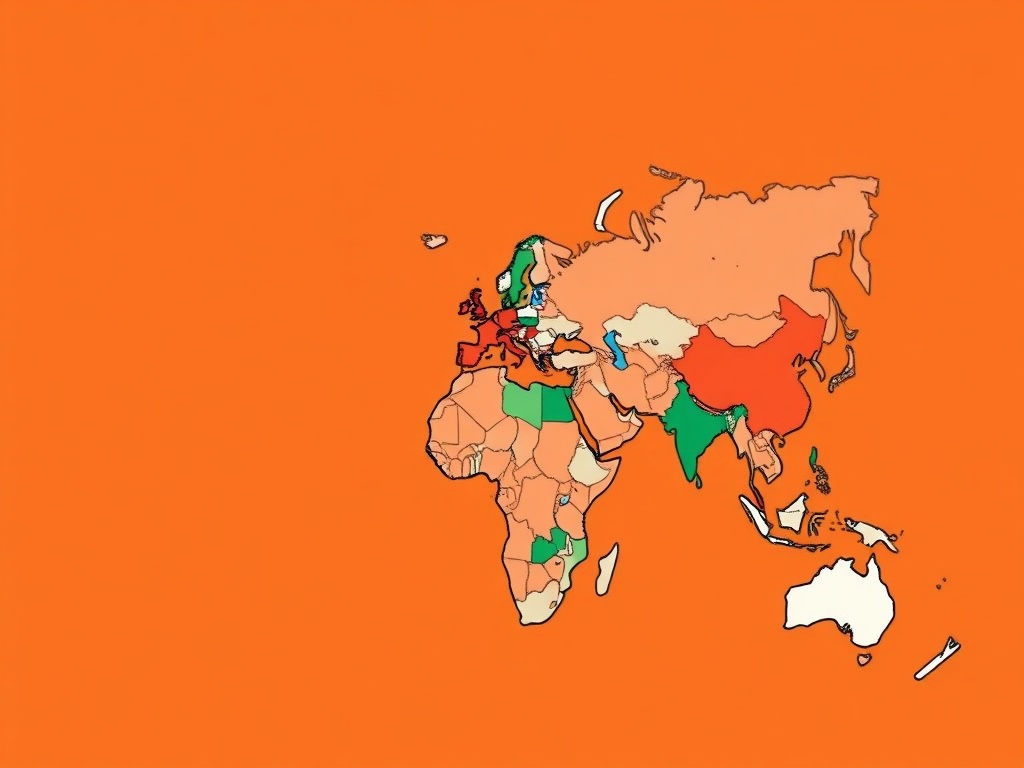
In today’s global financial landscape, Anti-Money Laundering (AML) compliance is not just a regulatory requirement—it’s a critical component of risk management and operational integrity. Financial institutions, fintech companies, and regulated entities must conduct thorough AML checks to prevent illicit financial activities, including money laundering, terrorist financing, and fraud. One of the most effective strategies in this domain is performing an AML check country by country, ensuring that each jurisdiction’s unique regulatory framework is understood and adhered to.
This guide provides a detailed, country-by-country analysis of AML regulations, best practices, and compliance strategies. Whether you're a compliance officer, risk manager, or business owner, understanding how to conduct an AML check country by country will help you mitigate risks, avoid penalties, and maintain trust with regulators and customers alike.
---Why Conduct an AML Check Country by Country?
Financial crime knows no borders. Criminals exploit gaps in regulatory frameworks, weak enforcement, and inconsistent AML standards across jurisdictions. To combat this, institutions must adopt a country-by-country AML check approach, ensuring that their compliance programs align with local laws, international standards, and emerging threats.
The Risks of Ignoring Jurisdictional Differences
Failing to account for country-specific AML regulations can lead to severe consequences, including:
- Regulatory fines and penalties: Regulators such as FinCEN (U.S.), FCA (UK), and BaFin (Germany) impose hefty fines for non-compliance. For example, in 2022, a major European bank was fined €3.7 billion for AML failures across multiple jurisdictions.
- Reputational damage: Publicized AML violations erode customer trust and investor confidence, leading to long-term financial and operational setbacks.
- Operational disruptions: Non-compliance may result in account freezes, transaction delays, or even license revocation in extreme cases.
- Legal exposure: Institutions may face lawsuits from affected parties or become unwittingly complicit in financial crimes.
Benefits of a Country-Specific AML Check
Conducting an AML check country by country offers several strategic advantages:
- Enhanced risk assessment: Tailoring due diligence processes to each country’s risk profile helps identify high-risk clients, transactions, and jurisdictions.
- Proactive compliance: Staying ahead of regulatory changes in key markets reduces the likelihood of enforcement actions.
- Efficient resource allocation: Focusing compliance efforts on high-risk jurisdictions ensures optimal use of time and budget.
- Stronger customer relationships: Demonstrating a commitment to AML compliance builds trust with regulators and clients.
By integrating a country-by-country AML check into your compliance framework, you position your institution as a responsible and vigilant participant in the global financial system.
---Key AML Regulations Around the World: A Country-by-Country Breakdown
AML regulations vary significantly across jurisdictions, reflecting differences in legal systems, economic priorities, and enforcement capabilities. Below is a detailed overview of AML frameworks in key regions, highlighting critical requirements for conducting an AML check country by country.
North America: The U.S. and Canada
The United States and Canada are global leaders in AML enforcement, with stringent regulations enforced by agencies such as FinCEN, OFAC, and FINTRAC.
United States: The Bank Secrecy Act (BSA) and Beyond
The Bank Secrecy Act (BSA) is the cornerstone of U.S. AML regulations, requiring financial institutions to:
- Implement a Customer Due Diligence (CDD) program, including beneficial ownership identification.
- File Suspicious Activity Reports (SARs) and Currency Transaction Reports (CTRs) with FinCEN.
- Conduct ongoing monitoring of high-risk customers and transactions.
- Comply with the Corporate Transparency Act (CTA), which mandates reporting beneficial ownership information to FinCEN.
For an AML check country by country in the U.S., institutions must also consider state-level regulations, such as New York’s Part 504 requirements, which impose additional compliance obligations on covered institutions.
Canada: Proceeds of Crime (Money Laundering) and Terrorist Financing Act (PCMLTFA)
Canada’s PCMLTFA requires reporting entities to:
- Register with FINTRAC and maintain detailed records of transactions.
- Implement a Risk-Based Approach (RBA) to identify and mitigate money laundering risks.
- File Suspicious Transaction Reports (STRs) and Large Cash Transaction Reports (LCTRs).
- Conduct enhanced due diligence for politically exposed persons (PEPs) and high-risk jurisdictions.
Canada’s FINTRAC is known for its rigorous enforcement, making a thorough AML check country by country essential for any institution operating in or with Canadian entities.
Europe: The EU’s AML Directives and National Variations
Europe’s AML landscape is shaped by the EU’s Sixth Anti-Money Laundering Directive (6AMLD) and the upcoming EU AML Package, which aims to harmonize AML standards across member states. However, national variations persist, requiring a nuanced AML check country by country.
United Kingdom: The Money Laundering Regulations 2017
The UK’s Money Laundering Regulations 2017 (MLR 2017) align with the EU’s 5AMLD and 6AMLD, requiring firms to:
- Conduct Enhanced Due Diligence (EDD) for high-risk customers, including PEPs and non-EU entities.
- Implement a Risk Assessment to identify and mitigate AML risks.
- Appoint a Money Laundering Reporting Officer (MLRO) to oversee compliance.
- File Suspicious Activity Reports (SARs) with the National Crime Agency (NCA).
Post-Brexit, the UK has introduced its own Economic Crime (Transparency and Enforcement) Act 2022, further tightening AML controls. Institutions must conduct a meticulous AML check country by country to navigate these evolving requirements.
Germany: The Money Laundering Act (GwG)
Germany’s Geldwäschegesetz (GwG) is one of the strictest AML laws in Europe, mandating:
- Registration with the Financial Intelligence Unit (FIU) for all obliged entities.
- Implementation of a Risk Management System to identify and mitigate AML risks.
- Enhanced due diligence for high-risk jurisdictions, including those on the EU’s list of high-risk third countries.
- Regular reporting of suspicious transactions to the FIU.
Germany’s enforcement agency, BaFin, is known for its aggressive stance on AML violations, making a comprehensive AML check country by country a necessity for any institution operating in Germany.
France: The Sapin II Law and TRACFIN
France’s Sapin II Law and the Tracfin (Financial Intelligence Unit) require firms to:
- Implement a Compliance Program with dedicated AML officers.
- Conduct ongoing monitoring of transactions and customer behavior.
- Report suspicious activities to Tracfin within 24 hours of detection.
- Adhere to the French High Council for Financial Stability (HCSF) guidelines on high-risk jurisdictions.
France’s focus on transparency and rapid reporting makes it a critical jurisdiction for any AML check country by country analysis.
Asia-Pacific: Evolving AML Frameworks
The Asia-Pacific region presents a mix of mature and emerging AML regimes, with countries adopting international standards at varying speeds. Conducting an AML check country by country in this region requires careful attention to local nuances.
Singapore: The Corruption, Drug Trafficking and Other Serious Crimes (Confiscation of Benefits) Act
Singapore’s CDSA is a robust AML framework that requires firms to:
- Implement a Risk-Based Approach to identify and mitigate money laundering risks.
- Conduct enhanced due diligence for high-risk customers, including PEPs and shell companies.
- File Suspicious Transaction Reports (STRs) with the Suspect Transaction Reporting Office (STRO).
- Comply with the Monetary Authority of Singapore (MAS) guidelines on digital payment token services.
Singapore’s reputation as a financial hub makes it a key jurisdiction for any AML check country by country assessment.
Japan: The Act on Prevention of Transfer of Criminal Proceeds
Japan’s APTCP requires financial institutions to:
- Implement a Customer Identification Program (CIP) for all clients.
- Conduct ongoing monitoring of transactions and customer behavior.
- File Suspicious Transaction Reports (STRs) with the Japan Financial Intelligence Center (JAFIC).
- Adhere to the Financial Services Agency (FSA) guidelines on high-risk jurisdictions.
Japan’s strict enforcement and focus on technological innovation make it a critical market for AML compliance.
China: The Anti-Money Laundering Law of the People’s Republic of China
China’s AML Law is one of the most comprehensive in the region, requiring firms to:
- Implement a Real-Name System for all financial transactions.
- Conduct enhanced due diligence for high-risk customers, including foreign entities.
- File Suspicious Transaction Reports (STRs) with the People’s Bank of China (PBOC).
- Adhere to the State Administration for Market Regulation (SAMR) guidelines on corporate transparency.
China’s evolving AML landscape, particularly in the context of digital currencies and cross-border transactions, makes a thorough AML check country by country essential for institutions operating in or with Chinese entities.
Middle East and Africa: High-Risk Jurisdictions and Emerging Regulations
The Middle East and Africa present unique AML challenges, with high-risk jurisdictions requiring enhanced due diligence and robust compliance programs. Conducting an AML check country by country in this region is critical for institutions operating in or with entities from these jurisdictions.
United Arab Emirates (UAE): The Federal Decree-Law No. 20 of 2018
The UAE’s AML Law requires firms to:
- Implement a Risk-Based Approach to identify and mitigate money laundering risks.
- Conduct enhanced due diligence for high-risk customers, including PEPs and shell companies.
- File Suspicious Transaction Reports (STRs) with the Financial Intelligence Unit (FIU).
- Adhere to the Central Bank of the UAE guidelines on digital assets and virtual currencies.
The UAE’s status as a global financial hub makes it a key jurisdiction for any AML check country by country analysis.
South Africa: The Financial Intelligence Centre Act (FICA)
South Africa’s FICA requires firms to:
- Register with the Financial Intelligence Centre (FIC) and maintain detailed records of transactions.
- Implement a Risk Management and Compliance Program (RMCP).
- File Suspicious Transaction Reports (STRs) with the FIC.
- Conduct enhanced due diligence for high-risk jurisdictions, including those on the FATF’s grey list.
South Africa’s focus on combating corruption and financial crime makes it a critical market for AML compliance.
Nigeria: The Money Laundering (Prohibition) Act 2022
Nigeria’s MLPA 2022 requires firms to:
- Implement a Customer Due Diligence (CDD) program for all clients.
- Conduct enhanced due diligence for high-risk customers, including PEPs and non-resident entities.
- File Suspicious Transaction Reports (STRs) with the Nigerian Financial Intelligence Unit (NFIU).
- Adhere to the Central Bank of Nigeria (CBN) guidelines on digital payments and fintech.
Nigeria’s status as Africa’s largest economy and its evolving AML framework make it a key jurisdiction for any AML check country by country assessment.
---Best Practices for Conducting an AML Check Country by Country
Performing an AML check country by country is not a one-time task—it requires ongoing vigilance, adaptability, and a deep understanding of local regulations. Below are best practices to ensure your compliance program remains effective and up-to-date.
1. Leverage Regulatory Technology (RegTech) Solutions
Manual AML checks are time-consuming, error-prone, and inefficient. RegTech solutions can automate key aspects of an AML check country by country, including:
- Sanctions screening: Automated tools can screen customers and transactions against global sanctions lists, including OFAC, EU, and UN sanctions.
- PEP and adverse media screening: AI-powered solutions can identify politically exposed persons and negative news associated with customers.
- Transaction monitoring: Real-time monitoring systems can flag suspicious activities based on predefined risk thresholds.
- Regulatory change management: Automated alerts can notify compliance teams of updates to AML laws in key jurisdictions.
By integrating RegTech into your compliance framework, you can enhance the accuracy and efficiency of your AML check country by country.
2. Conduct Regular Risk Assessments
A robust risk assessment is the foundation of an effective AML check country by country. Key steps include:
- Identify high-risk jurisdictions: Use resources such as the FATF’s list of high-risk and non-cooperative jurisdictions to identify countries with weak AML controls.
- Assess customer risk profiles: Evaluate customers based on factors such as their country of residence, industry, transaction patterns, and associations with PEPs.
- Evaluate product and service risks: Certain products, such as correspondent banking, private banking, and digital assets, carry higher AML risks.
- Review historical compliance data: Analyze past SARs, enforcement actions, and regulatory findings to identify patterns and areas for improvement.
Regular risk assessments ensure that your AML check country by country remains aligned with evolving threats and regulatory expectations.
3. Implement a Risk-Based Approach (RBA)
The Risk-Based Approach (RBA) is a cornerstone of effective AML compliance, allowing institutions to allocate resources proportionally to risk levels. Key components of an RBA include:
- Tiered due diligence: Apply simplified due diligence (SDD) for low-risk customers and enhanced due diligence (EDD) for high-risk customers.
- Ongoing monitoring: Continuously monitor customer behavior and transaction patterns to detect anomalies.
- Dynamic risk scoring: Use data analytics to assign risk scores to customers and transactions, enabling proactive risk management.
- Adaptive policies and procedures: Regularly update your AML policies to reflect changes in risk profiles and regulatory requirements.
 David ChenDigital Assets Strategist
Global AML Compliance: A Country-by-Country Breakdown for Digital Asset Strategies
As a digital assets strategist with a background in traditional finance and quantitative analysis, I’ve observed that the regulatory landscape for anti-money laundering (AML) compliance in cryptocurrency is anything but uniform. The phrase "AML check country by country" isn’t just a procedural requirement—it’s a strategic imperative for institutions and investors navigating cross-border transactions. Jurisdictions like the U.S., EU, and Singapore have established rigorous frameworks, such as the Bank Secrecy Act (BSA) and the Fifth AML Directive (5AMLD), which mandate strict KYC/AML checks for virtual asset service providers (VASPs). Meanwhile, emerging markets like the UAE and Switzerland are adopting more nuanced approaches, balancing innovation with compliance. For digital asset portfolios, this fragmentation creates both risks and opportunities: while stricter regimes like the EU’s MiCA regulation provide clarity, others with looser enforcement may expose firms to counterparty or regulatory risks. A country-by-country AML check isn’t just about ticking boxes—it’s about mapping exposure to jurisdictions with varying levels of enforcement, technological readiness, and geopolitical alignment.
From a practical standpoint, the key to effective AML compliance lies in dynamic, data-driven risk assessment. Tools like on-chain analytics platforms (e.g., Chainalysis, TRM Labs) can automate transaction monitoring, but they must be paired with jurisdiction-specific due diligence. For instance, a U.S.-based fund dealing with a counterparty in the Cayman Islands must account for the Cayman’s AML laws, which may differ from those in the EU or Singapore. Additionally, the rise of decentralized finance (DeFi) complicates this further, as protocols may not fall under traditional VASP definitions, leaving gaps in AML oversight. My recommendation? Adopt a tiered compliance strategy: prioritize jurisdictions with clear regulatory guidance (e.g., EU, U.S.), conduct enhanced due diligence for high-risk regions (e.g., certain African or Latin American countries), and leverage blockchain forensics to monitor suspicious activity in real time. Ultimately, a proactive, country-by-country AML check isn’t just about avoiding penalties—it’s about building a resilient, globally compliant digital asset strategy.