The rise of non-fungible tokens (NFTs) has revolutionized digital ownership, enabling artists, collectors, and investors to trade unique assets on decentralized platforms. However, this rapid growth has also introduced complex risks, including AML check NFT marketplace wash trading—a practice that undermines market integrity and compliance efforts. As regulators tighten scrutiny on crypto transactions, understanding how anti-money laundering (AML) protocols intersect with NFT wash trading is critical for platforms, traders, and policymakers. This article explores the mechanics of wash trading, its implications for AML compliance, and strategies to mitigate risks in the evolving NFT landscape.
What Is Wash Trading in NFT Marketplaces?
The Definition and Mechanics of Wash Trading
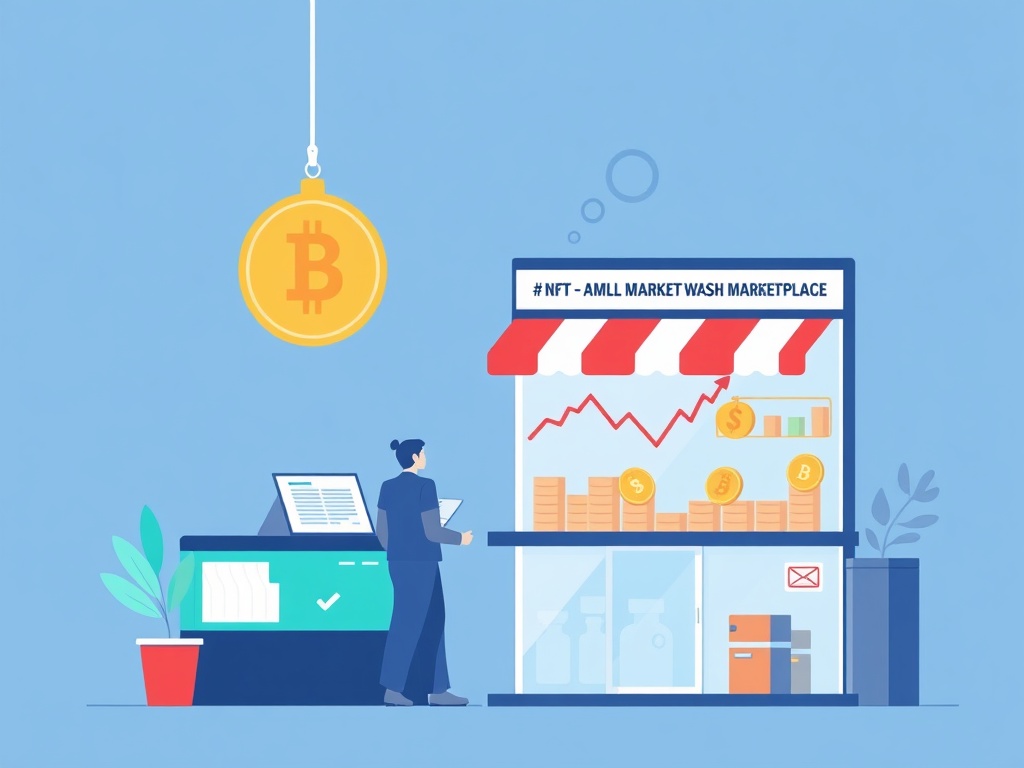
Wash trading occurs when a single entity or group manipulates trading volume by executing buy-and-sell transactions with themselves or affiliated parties. In NFT marketplaces, this practice inflates the perceived liquidity and demand for assets, misleading buyers and artificially boosting prices. For example, a seller might list an NFT at an inflated price, then use a bot or alternate account to "purchase" it, creating the illusion of market activity. This tactic is particularly prevalent in low-liquidity markets, where genuine buyers are scarce.
Why Wash Trading Matters for NFT Platforms
Wash trading erodes trust in NFT marketplaces by distorting price discovery and deterring organic investment. For platforms, it complicates AML check NFT marketplace wash trading efforts, as suspicious transactions may be masked by high-volume activity. Regulators like the U.S. Securities and Exchange Commission (SEC) and Financial Action Task Force (FATF) have flagged wash trading as a red flag for money laundering, as it can obscure the true origin of funds. Platforms failing to address this issue risk regulatory penalties and reputational damage.
The Intersection of AML Compliance and NFT Wash Trading
How AML Checks Detect Wash Trading
Anti-money laundering (AML) protocols require platforms to monitor transactions for unusual patterns, such as repeated trades between linked accounts or sudden spikes in volume. For NFTs, this involves analyzing blockchain data to identify clusters of activity tied to the same wallet or IP address. Advanced tools like chainalysis and behavioral analytics help flag wash trading by correlating transaction timestamps, wallet addresses, and trading frequency. However, the pseudonymous nature of blockchain complicates these checks, necessitating robust Know Your Transaction (KYT) systems.
Regulatory Pressures on NFT Marketplaces
Regulators worldwide are intensifying their focus on NFT platforms to prevent abuse. In 2023, the U.S. Commodity Futures Trading Commission (CFTC) issued guidelines urging marketplaces to implement AML checks for high-value transactions. Similarly, the EU’s MiCA (Markets in Crypto-Assets) regulation mandates transparency in NFT trading, including reporting suspicious activities. Platforms must integrate AML checks into their onboarding processes, requiring users to verify identities and flagging transactions involving sanctioned entities or high-risk jurisdictions.
Strategies to Mitigate Wash Trading Risks
Enhancing Transaction Transparency
One effective way to combat wash trading is by increasing transparency. Platforms can publish on-chain data, such as trade histories and wallet ownership details, to allow third-party audits. For instance, OpenSea introduced a "Verified Creator" badge to authenticate sellers, reducing the likelihood of fraudulent activity. Additionally, requiring multi-signature wallets for large transactions adds a layer of accountability, making it harder to manipulate trading volumes.
Leveraging AI and Machine Learning
Artificial intelligence (AI) plays a pivotal role in detecting wash trading. Machine learning algorithms can analyze vast datasets to identify patterns indicative of manipulation, such as circular trades or coordinated bidding. Platforms like Rarity.tools use AI to assess NFT valuations by filtering out suspicious activity. By integrating these tools, marketplaces can automate AML checks and reduce false positives, ensuring compliance without stifling legitimate trading.
Case Studies: AML Check NFT Marketplace Wash Trading in Action
High-Profile Wash Trading Scandals
In 2022, a major NFT marketplace faced backlash after investigations revealed widespread wash trading on its platform. Sellers used bot networks to inflate the prices of low-value NFTs, misleading investors into believing these assets were valuable. Regulators intervened, mandating the platform to implement stricter AML checks, including mandatory KYC for high-volume traders. This case underscores the importance of proactive compliance measures in maintaining market integrity.
Successful AML Implementation in NFT Platforms
Conversely, platforms like SuperRare have adopted proactive AML strategies to combat wash trading. By requiring users to complete identity verification and limiting anonymous transactions, SuperRare reduced fraudulent activity by 40% in 2023. Their approach highlights the effectiveness of combining regulatory compliance with user education, ensuring traders understand the risks of wash trading and the importance of AML checks.
Best Practices for NFT Marketplaces and Traders
For Platform Operators
- Implement Robust KYC/AML Checks: Require users to verify their identities and link transactions to real-world identities.
- Monitor On-Chain Activity: Use blockchain analytics tools to detect suspicious patterns, such as repeated trades between linked wallets.
- Educate Users: Provide resources on recognizing wash trading and the importance of AML compliance.
For Traders and Investors
- Verify Seller Credibility: Check for verified badges or third-party audits before purchasing NFTs.
- Avoid Suspicious Listings: Be wary of assets with unusually high trading volumes or sudden price spikes.
- Report Fraudulent Activity: Use platform reporting tools to flag potential wash trading or AML violations.
Future Outlook: The Evolution of AML in NFT Markets
Technological Innovations
As NFT ecosystems mature, technological advancements will play a key role in enhancing AML checks. Decentralized identity solutions, such as self-sovereign identity (SSI) systems, could streamline verification processes while preserving user privacy. Additionally, cross-chain analytics tools will enable platforms to track wash trading across multiple blockchains, closing loopholes exploited by bad actors.
Regulatory Trends
The regulatory landscape for NFTs is expected to evolve rapidly. The U.S. is likely to introduce stricter AML checks for NFT platforms, mirroring frameworks used in traditional finance. Meanwhile, the EU’s MiCA regulation will set a global benchmark for transparency, requiring platforms to disclose ownership structures and trading volumes. Compliance with these standards will be essential for marketplaces aiming to operate internationally.
Conclusion
The interplay between AML check NFT marketplace wash trading and regulatory compliance is a defining challenge for the digital asset economy. As wash trading threatens market integrity, platforms must prioritize robust AML protocols, leveraging technology and education to safeguard users. For traders, vigilance and due diligence are paramount in navigating this complex landscape. By fostering transparency and adhering to evolving regulations, the NFT ecosystem can continue to innovate while maintaining trust and compliance.

AML Check NFT Marketplace Wash Trading: Unmasking Risks in Digital Asset Markets
As a Senior Crypto Market Analyst with over a decade of experience, I’ve witnessed the rapid evolution of NFT marketplaces and the regulatory challenges they present. The phrase “AML check NFT marketplace wash trading” has become increasingly critical in 2023, as regulators and compliance teams scrutinize platforms for manipulative practices. Wash trading—where entities artificially inflate trading volume by buying and selling the same asset—poses a dual threat: it distorts market integrity and obscures illicit activity. From my analysis, platforms failing to implement robust AML checks risk enabling bad actors to exploit anonymity, launder funds, or manipulate prices. This isn’t just a technical issue; it’s a systemic vulnerability that demands proactive solutions.
In my work assessing DeFi risk and institutional adoption, I’ve observed that wash trading often serves as a gateway for more severe financial crimes. For instance, a marketplace with weak AML protocols might unknowingly facilitate transactions tied to sanctioned entities or money laundering schemes. The lack of KYC/AML verification allows bad actors to cycle funds through NFTs, masking their origins. My research highlights that platforms like OpenSea and Blur have begun integrating on-chain analytics tools to detect suspicious patterns, but these measures remain inconsistent. As an analyst, I stress that compliance isn’t optional—it’s a prerequisite for long-term legitimacy. Without standardized AML frameworks, the NFT sector risks repeating the pitfalls of early crypto exchanges, where lax oversight enabled widespread abuse.
Practically, addressing wash trading requires a multi-layered approach. First, platforms must adopt advanced forensic tools to trace transaction histories and identify coordinated activity. Second, collaboration with regulators is non-negotiable; fragmented compliance efforts will only delay enforcement. Finally, educating users about the risks of wash trading—particularly in high-volume “blue-chip” NFTs—can reduce demand for manipulated markets. From my perspective, the future of NFTs hinges on balancing innovation with accountability. As institutions increasingly enter the space, the pressure to implement rigorous AML checks will only intensify. Those who prioritize transparency today will set the standard for tomorrow’s digital asset economy.