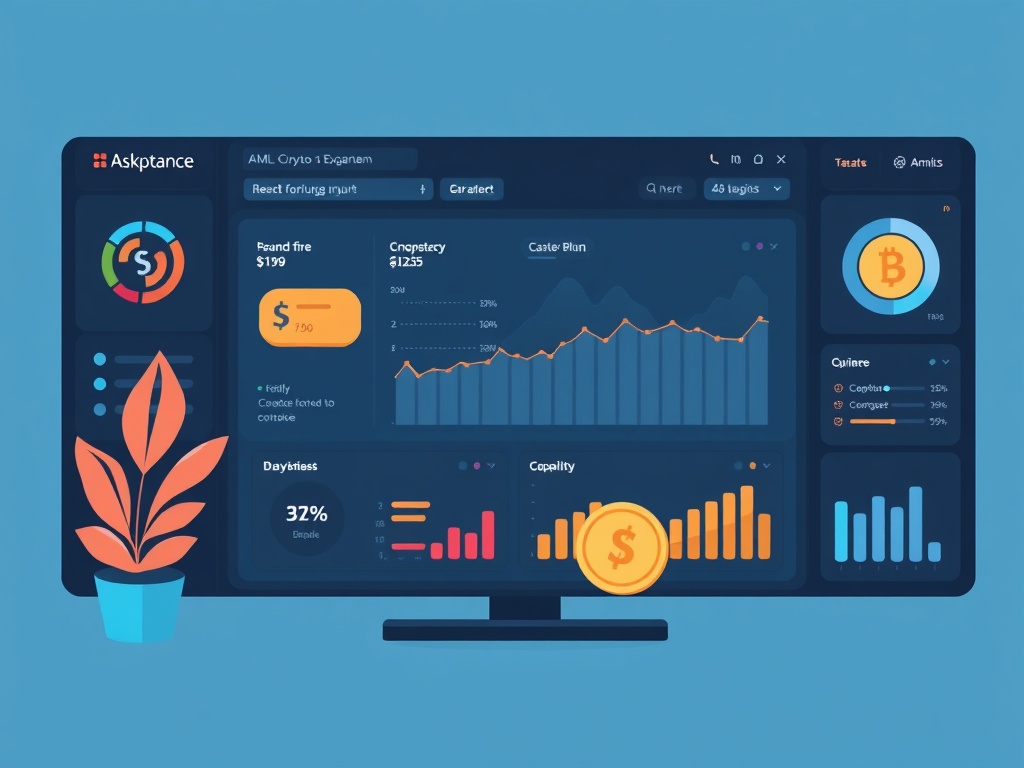
The rapid evolution of cryptocurrency markets has brought unprecedented opportunities for financial innovation, but it has also introduced significant risks related to money laundering and terrorist financing. As regulators worldwide tighten their grip on digital asset platforms, the need for robust AML check crypto exchange compliance dashboard systems has never been more critical. These dashboards serve as the nerve center for monitoring transactions, identifying suspicious activities, and ensuring adherence to Anti-Money Laundering (AML) regulations. In this article, we will explore the role of AML compliance dashboards in crypto exchanges, their key features, implementation challenges, and future trends shaping this essential tool for financial security.
The Role of AML Compliance Dashboards in Crypto Exchanges
Crypto exchanges operate in a high-risk environment due to the anonymity and global nature of digital currencies. Unlike traditional banking systems, which have established AML frameworks, cryptocurrency platforms face unique challenges in tracking transactions across decentralized networks. An AML check crypto exchange compliance dashboard acts as a centralized hub for real-time monitoring, enabling exchanges to detect and mitigate illicit activities efficiently. By integrating advanced analytics and machine learning algorithms, these dashboards empower compliance teams to stay ahead of evolving threats.
Key Functions of a Compliance Dashboard
A well-designed AML compliance dashboard for crypto exchanges typically includes the following core functions:
- Transaction Monitoring: Continuous analysis of blockchain transactions to flag unusual patterns, such as large transfers or rapid movement of funds between multiple wallets.
- Customer Due Diligence (CDD): Automated verification of user identities, including Know Your Customer (KYC) checks and risk assessments based on geographic and behavioral data.
- Risk Scoring: Assigning risk levels to users and transactions using predefined criteria, such as transaction history, wallet age, and jurisdictional factors.
- Alert Generation: Immediate notifications for suspicious activities, allowing compliance officers to investigate and report potential violations promptly.
- Regulatory Reporting: Streamlined generation of reports for authorities, including Suspicious Activity Reports (SARs) and Travel Rule compliance documentation.
These features collectively ensure that exchanges maintain a proactive stance against financial crimes while minimizing false positives that could overwhelm compliance teams.
Why Real-Time Monitoring is Critical for Crypto Exchanges
The decentralized and pseudonymous nature of cryptocurrencies makes them attractive to bad actors seeking to exploit regulatory gaps. Traditional AML systems, designed for fiat transactions, often struggle to keep pace with the speed and complexity of crypto movements. This is where an AML check crypto exchange compliance dashboard becomes indispensable. Real-time monitoring allows exchanges to:
- Identify Red Flags Instantly: Detect anomalies such as structuring transactions to evade reporting thresholds or the use of mixers to obfuscate fund origins.
- Prevent Reputational Damage: Address compliance breaches before they escalate into public scandals or regulatory penalties.
- Enhance Operational Efficiency: Automate repetitive tasks like transaction screening and report generation, freeing up human resources for strategic decision-making.
Moreover, real-time capabilities enable exchanges to adapt dynamically to emerging threats, such as new money laundering techniques or sudden shifts in regulatory requirements.
Integration with Blockchain Analytics Tools
To maximize effectiveness, AML compliance dashboards must integrate with blockchain analytics platforms. These tools provide on-chain intelligence, such as wallet clustering and transaction graph analysis, to uncover hidden relationships between addresses. For example, a dashboard might link a high-risk wallet to known illicit actors or identify patterns consistent with ransomware payments. By combining blockchain data with traditional AML checks, exchanges gain a holistic view of risk.
Challenges in Implementing AML Compliance Dashboards
While the benefits of an AML check crypto exchange compliance dashboard are clear, implementation is not without hurdles. Crypto exchanges often face technical, regulatory, and operational challenges when deploying these systems:
- Data Complexity: Blockchain transactions generate vast amounts of data, requiring scalable infrastructure to process and analyze information efficiently.
- Regulatory Fragmentation: Differing AML requirements across jurisdictions complicate compliance efforts, necessitating dashboards that can adapt to multiple frameworks.
- False Positives: Overly sensitive detection algorithms may flag legitimate transactions, leading to unnecessary investigations and customer friction.
- Cost and Expertise: Developing and maintaining advanced dashboards requires significant investment in technology and skilled personnel.
To overcome these challenges, exchanges must prioritize collaboration with fintech providers, invest in staff training, and adopt modular dashboard designs that allow for incremental upgrades.
Balancing Compliance and User Experience
One of the most delicate aspects of AML compliance is maintaining a balance between regulatory obligations and user experience. Overly stringent checks can deter customers, while lax measures risk non-compliance. A sophisticated AML check crypto exchange compliance dashboard can help strike this balance by:
- Customizing Risk Thresholds: Tailoring detection rules to the specific risk profile of each exchange, such as adjusting thresholds for high-volume traders versus casual users.
- Leveraging Behavioral Analytics: Using machine learning to distinguish between normal and suspicious behavior, reducing the need for intrusive manual checks.
- Providing Transparency: Offering users clear explanations for flagged transactions, fostering trust and cooperation during investigations.
By integrating user-centric design principles, exchanges can ensure compliance without compromising customer satisfaction.
Best Practices for Optimizing AML Compliance Dashboards
To maximize the effectiveness of an AML check crypto exchange compliance dashboard, exchanges should adopt the following best practices:
- Regularly Update Detection Rules: Stay informed about emerging threats and regulatory updates to refine monitoring algorithms and avoid outdated methodologies.
- Conduct Frequent Audits: Perform internal and third-party audits to assess dashboard performance, identify gaps, and ensure alignment with evolving standards.
- Foster Cross-Department Collaboration: Encourage cooperation between compliance, IT, and legal teams to ensure the dashboard addresses technical, operational, and legal requirements.
- Invest in Employee Training: Equip compliance officers with the skills to interpret dashboard insights and respond to alerts effectively.
Additionally, exchanges should consider adopting a risk-based approach to compliance, focusing resources on high-risk areas while maintaining baseline controls across the platform.
Leveraging AI and Machine Learning
Artificial intelligence (AI) and machine learning (ML) are transforming AML compliance dashboards by enabling predictive analytics and adaptive learning. For instance, ML models can analyze historical data to identify patterns associated with money laundering, such as the use of specific transaction types or wallet clusters. Over time, these models improve their accuracy, reducing false positives and enhancing detection rates. Exchanges that integrate AI-driven dashboards gain a competitive edge in both compliance and operational efficiency.
Future Trends in AML Compliance for Crypto Exchanges
The landscape of AML compliance for crypto exchanges is constantly evolving, driven by technological advancements and regulatory developments. Several trends are poised to shape the future of AML check crypto exchange compliance dashboard systems:
- Decentralized Identity Solutions: Blockchain-based identity verification systems could streamline KYC processes while enhancing privacy, reducing the need for centralized data storage.
- Cross-Exchange Collaboration: Shared intelligence networks among exchanges may enable collective monitoring of suspicious activities, improving threat detection across the ecosystem.
- Regulatory Technology (RegTech): Emerging RegTech solutions will simplify compliance by automating regulatory updates and integrating them directly into dashboard workflows.
- Global Standardization Efforts: Initiatives like the Financial Action Task Force (FATF) Travel Rule aim to create uniform AML standards for crypto, requiring dashboards to support interoperability and data sharing.
As these trends unfold, exchanges must remain agile, continuously updating their dashboards to meet new demands while maintaining robust security and privacy protections.
The Importance of Data Privacy in Compliance
While AML compliance is non-negotiable, exchanges must also safeguard user data to maintain trust. An AML check crypto exchange compliance dashboard should incorporate privacy-by-design principles, ensuring that sensitive information is encrypted and access is restricted to authorized personnel. Techniques such as anonymization and pseudonymization can help protect user identities while still enabling effective monitoring. Balancing transparency with confidentiality will be a key challenge as exchanges navigate the intersection of compliance and privacy.
Conclusion: The Path Forward for AML Compliance in Crypto
The rise of cryptocurrency has redefined the financial landscape, but it has also necessitated a paradigm shift in AML compliance. An AML check crypto exchange compliance dashboard is no longer a luxury—it is a necessity for exchanges seeking to operate responsibly in a regulated environment. By investing in advanced monitoring tools, fostering cross-industry collaboration, and prioritizing user-centric design, exchanges can mitigate risks while fostering innovation. As regulatory frameworks mature and technology advances, the role of compliance dashboards will only grow in importance, serving as the cornerstone of a safer, more transparent crypto ecosystem.

The Critical Role of an AML Check Crypto Exchange Compliance Dashboard in Modern Digital Asset Management
As a certified financial analyst with over a decade of experience in cryptocurrency investment strategies, I’ve seen how regulatory challenges can either hinder or accelerate the growth of digital asset markets. The AML check crypto exchange compliance dashboard is not just a tool—it’s a necessity for exchanges operating in today’s highly regulated environment. This dashboard serves as a centralized platform that automates and streamlines anti-money laundering (AML) processes, ensuring exchanges meet global compliance standards while minimizing risks. For retail and institutional investors, this means greater transparency and trust in the platforms they use. From my perspective, the effectiveness of an AML check crypto exchange compliance dashboard hinges on its ability to integrate real-time data, machine learning algorithms, and customizable risk thresholds. These features allow exchanges to detect suspicious transactions instantly, reducing the likelihood of fraud or regulatory penalties. It’s a practical solution that balances compliance with operational efficiency, something I’ve emphasized in advising clients on secure crypto investment practices.
One of the most practical insights I’ve observed is how the AML check crypto exchange compliance dashboard transforms compliance from a reactive to a proactive process. Traditional AML checks often rely on manual reviews, which are time-consuming and prone to human error. A robust dashboard, however, leverages automated screening tools to flag high-risk transactions based on factors like geolocation, transaction volume, and user behavior. For example, an exchange using this dashboard can set up alerts for transactions exceeding a certain threshold or involving known high-risk jurisdictions. This not only saves time but also ensures that compliance teams can focus on higher-level strategic tasks rather than getting bogged down by repetitive checks. From an investor’s standpoint, this means exchanges are more likely to maintain a secure environment, which is critical for long-term confidence in the crypto market. I’ve advised several exchanges to adopt such dashboards as part of their onboarding and ongoing compliance frameworks, and the results have been measurable in terms of reduced false positives and faster resolution of potential issues.
Looking ahead, the AML check crypto exchange compliance dashboard will likely evolve to address emerging challenges in the crypto space, such as decentralized finance (DeFi) and cross-border transactions. As regulations become more complex, exchanges need tools that can adapt to changing legal landscapes. I believe the future of this dashboard lies in its integration with blockchain analytics and AI-driven risk assessment models. These advancements will enable exchanges to not only comply with current regulations but also anticipate future ones. For investors, this evolution is a positive sign—it indicates that the industry is maturing and prioritizing security. However, it’s also a reminder that compliance is not a one-time effort. Exchanges must continuously update their AML check crypto exchange compliance dashboard to reflect new threats and regulatory requirements. As an advisor, I stress the importance of this adaptability to my clients, ensuring they understand that compliance is an ongoing commitment, not a checkbox to tick. The AML check crypto exchange compliance dashboard is a cornerstone of that commitment, and its role will only grow as the crypto ecosystem expands.